
Super El Niño Threatens Zimbabwe’s Cattle Farmers
In Mpudzi 1 Resettlement Scheme, a small farming enclave south of Zimbabwe’s eastern border city of Mutare, farmers are anxiously preparing for the possibility of another severe El Niño-induced drought.
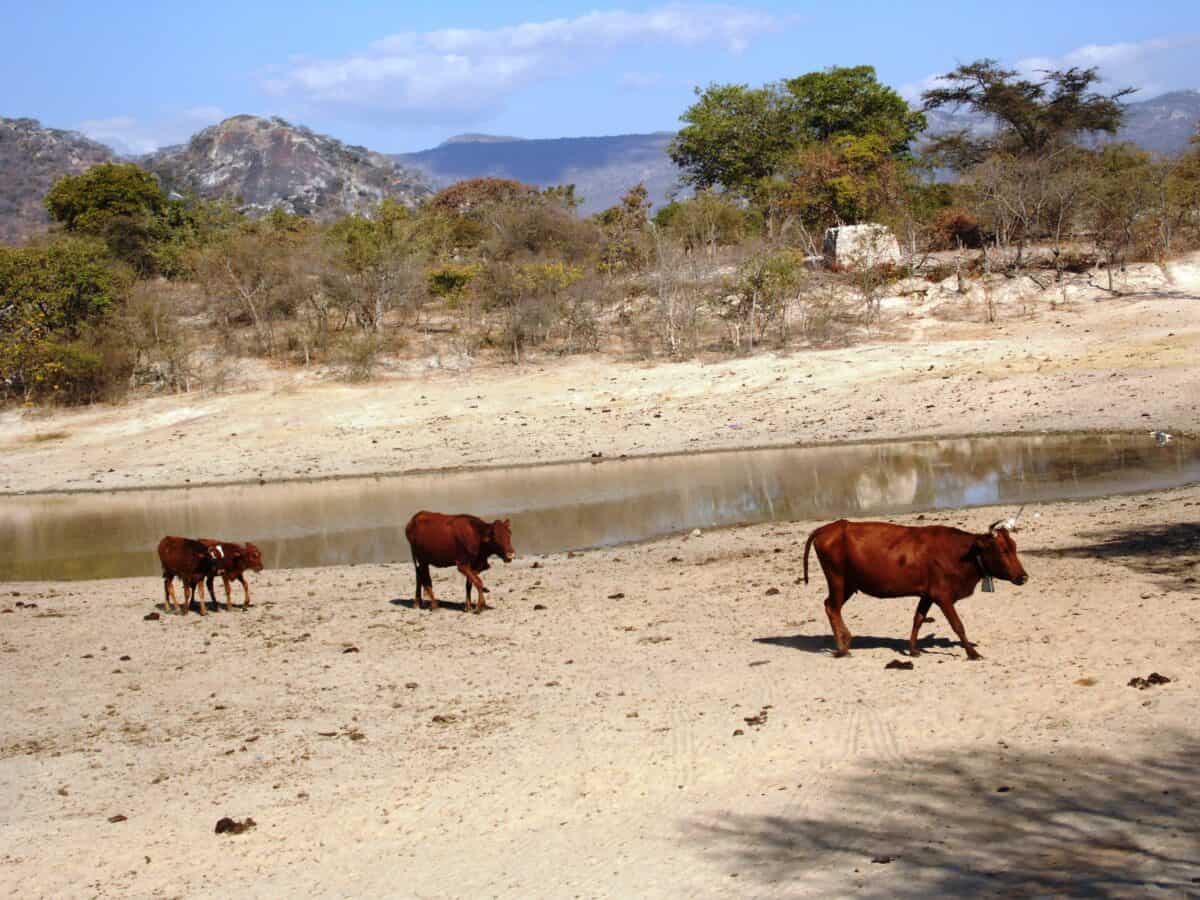
Still recovering from the 2025 drought, which destroyed crops and killed livestock, including cattle, the farmers fear they could once again face shortages of pasture and water if El Niño returns.
The community relies heavily on a small dam for watering livestock and some household uses. But farmers fear the reservoir may not hold enough water to carry them through months of prolonged dry conditions.
Recently, I visited this community. One farmer was filling large plastic barrels at the dam’s edge. Nearby, a few small ducks glided across the water, seemingly oblivious to the drought looming ahead. If the dam continues to shrink, they too may be forced to seek new water sources elsewhere. But long before cattle begin collapsing from thirst, the first warning signs of trouble are likely to emerge around this small reservoir: receding water levels, widening muddy banks and growing numbers of livestock competing for a drink.
Zimbabwe’s Meteorological Services Department is forecasting predominantly below-normal rainfall from October to December 2026, with dry conditions potentially persisting into the first months of 2027. Across the country farmers are preparing for a season in which water could become as valuable as grazing.
As rivers, dams and shallow wells dry up, animals may have to travel increasingly long distances in search of water. This can lead to weight loss and poor body condition, leaving cattle more vulnerable to disease, heat stress and death.

Some farmers have begun panic-selling cattle in anticipation of the drought. A rush to sell can depress prices as more animals enter the market at the same time, leaving households with fewer productive assets forcing them to sell at unfavourable prices.
Farmers are also grappling with outbreaks of January disease, a tick-borne cattle disease known scientifically as bovine theileriosis. The disease, whose spread is being worsened by climate change, can cause high mortality in affected cattle. Farmers have reported significant livestock losses, adding to concerns about their ability to withstand another severe drought.
“One of my bulls recently died of January disease,” cattle farmer Leonard Madanhire tells The Energy Pioneer.
Tapping Groundwater with Solar Pumps
But in this part of the country some farmers are turning to a resource that remains abundant even during drought: sunlight. Solar-powered borehole pumps can draw groundwater and deliver it to livestock watering points. For farmers in areas without reliable grid electricity, the technology offers a relatively simple way of securing water when surface sources begin to fail.
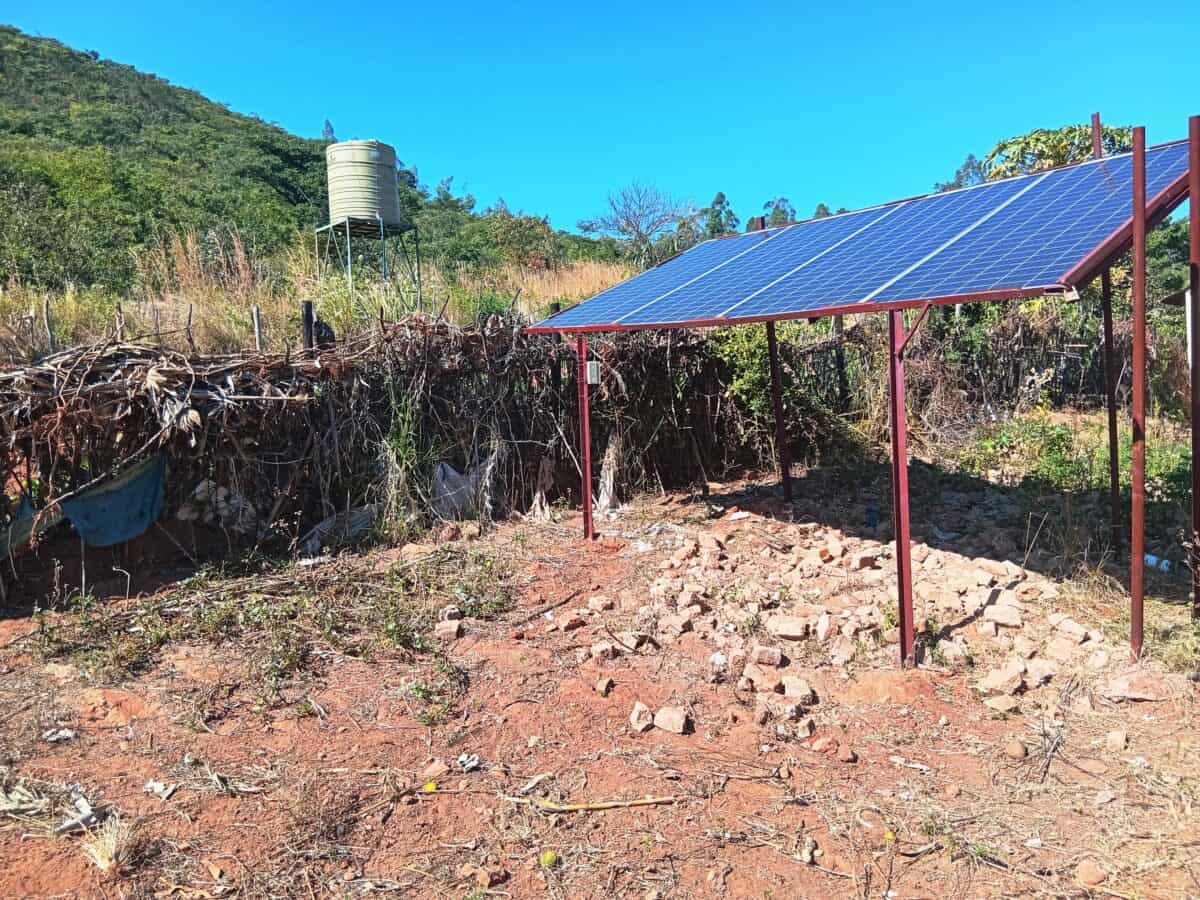
Farmer Alford Chadambuka uses a small solar-powered pump to provide water for his livestock and crops during dry periods. With another drought looming, Chadambuka is planning to invest in a larger solar pump and deepen his borehole, hoping to secure a more reliable source of water before the dry spell intensifies.
“I’m hoping that my borehole will survive the drought. I will make it deeper and invest in a bigger solar pump. But the season does not look good,” Chadambuka tells The Energy Pioneer.
For farmers like Chadambuka, the combination of solar power and groundwater provides an important advantage: even when dams shrink and electricity supplies become unreliable, water can still be pumped from underground.
But increasing reliance on groundwater also carries risks. As droughts become more frequent and farmers, households and government programmes drill more boreholes, groundwater experts are warning that the resource cannot be treated as an unlimited reserve.
“Long-term over-extraction without assessing sustainable pumping levels can lead to declining water tables, lower borehole yields, deteriorating water quality due to salt intrusion, and reduced ecosystem services that many rural communities depend on,” Professor David Chikodzi, a groundwater expert at Great Zimbabwe University, told me earlier this year.
Zimbabwe’s borehole boom, helped by the increasing availability of relatively cheap solar pumps, including equipment imported from China, has expanded access to groundwater. But Chikodzi says this expansion has occurred alongside limited scientific monitoring of how much groundwater is being extracted and whether aquifers are being replenished at the same rate.
Falling water tables, drying wetlands and declining borehole yields can be warning signs that groundwater resources are under increasing pressure.
“This is manifesting in high borehole failure rates, with some wells drying up before the next recharge season, forcing people to drill even deeper boreholes, often beyond 65 metres,” Chikodzi says.
Zimbabwe faces a particular groundwater challenge because more than 60 percent of the country is underlain by basement crystalline rock formations with low permeability, which generally produces relatively low groundwater yields, according to Chikodzi.
Yet more than 80 percent of rural communities depend on groundwater as their primary source of water, while growing numbers of urban residents are also turning to boreholes as municipal water supplies become increasingly unreliable.
The result is a growing dependence on a resource whose availability varies significantly from one location to another and whose replenishment depends on rainfall, geology and local hydrological conditions. Zimbabwe currently lacks a comprehensive national system for measuring groundwater extraction, Chikodzi says. Many boreholes are not fitted with bulk water meters, despite legal requirements, while others operate informally and remain outside systematic monitoring.
Groundwater is Disappearing
In research published in 2013, Chikodzi used satellite data and geographic information systems to examine groundwater potential across Zimbabwe. The research found considerable spatial variation in groundwater resources and identified areas where groundwater availability was relatively limited.
He says the combination of population growth, increasingly frequent droughts, pollution of surface water, and a rapid increase in borehole drilling is putting additional pressure on underground water reserves.
Over the past decade, government programmes, including presidential borehole schemes, as well as private households, farmers and businesses have significantly increased borehole drilling and groundwater pumping for domestic, agricultural and commercial purposes. The growing use of motorised pumps, including solar-powered systems, has also made it possible to extract groundwater more easily and continuously in places that previously relied on hand pumps or manually operated systems.
Solar pumps therefore present a paradox for drought-hit communities. They can reduce farmers’ dependence on unreliable electricity and expensive diesel while helping them secure water for livestock. But because sunlight is plentiful during droughts, solar technology can also make it easier to pump groundwater precisely when surface water is disappearing and demand for underground water is at its highest.
Chikodzi warns that the environmental and long-term water-security consequences could be severe if groundwater extraction remains poorly regulated. Groundwater and surface-water systems are closely interconnected, he explains. Excessive pumping in one area can reduce groundwater contributions to rivers and wetlands, potentially affecting water availability downstream.
Reduced groundwater reserves can also diminish river baseflows during the dry season, with consequences for river ecosystems, dams, irrigation schemes and urban and industrial water supplies.
“In short, water security, livelihoods and ecosystems will all be negatively affected by unregulated groundwater extraction,” he says.
For Chikodzi, addressing the problem requires more than regulations and penalties. Communities need to understand how groundwater systems work and why water pumped from a borehole is not necessarily an inexhaustible resource.
Though the government is moving in with stricter borehole regulations, Chikodzi says no amount of policies and fines can ensure sustainability if communities do not understand the dangers of overusing groundwater. He also stresses the need for Zimbabwe to train more groundwater hydrologists and equip journalists to communicate complex groundwater issues in ways ordinary citizens can understand.
One of the country’s most urgent priorities, he says, should be establishing a national groundwater monitoring system. Systematic measurement of groundwater levels and extraction, supported by smart and automated monitoring technologies capable of providing near-real-time data, could become a “game changer” for sustainable groundwater management in Zimbabwe, Chikodzi says.
For farmers in Mpudzi 1 Resettlement Scheme, however, those long-term concerns compete with an immediate problem which is keeping cattle alive through another potentially severe dry season. As the rains become less reliable and dams shrink, farmers are drilling deeper, installing larger solar pumps and looking underground for water.
The sun may provide the energy to keep that water flowing but whether Zimbabwe’s groundwater reserves can withstand the growing demand may become another test of how farmers adapt to a changing climate.