
Governments treat steelmaking as a matter of national security, protecting the industry with tariffs and subsidies. But few people realise that the steel industry still overwhelmingly runs on coal. Last year the world made the steel equivalent of 253,000 Eiffel Towers and around 70% of that was with coal. In a world that must move away from fossil fuels to limit climate change, protecting coal-based steelmaking is not security, it’s a risk.
This raises the question: who will make the steel of the future, and which energy sources will power its production?
Steelmaking is a Significant Contributor to Climate Change
From construction to cutlery, from wind turbines to washing machines, steel is an important part of modern life. Yet the link between steel, coal and climate change remains poorly understood. Iron and steelmaking account for 10% of global CO₂ emissions. Most emissions come from iron production in coal-based blast furnaces. It’s estimated that 86% of the steel sector’s CO₂ comes from blast-furnace ironmaking, with the average tonne of steel made this way resulting in 2.3 tonnes of CO₂ being emitted.
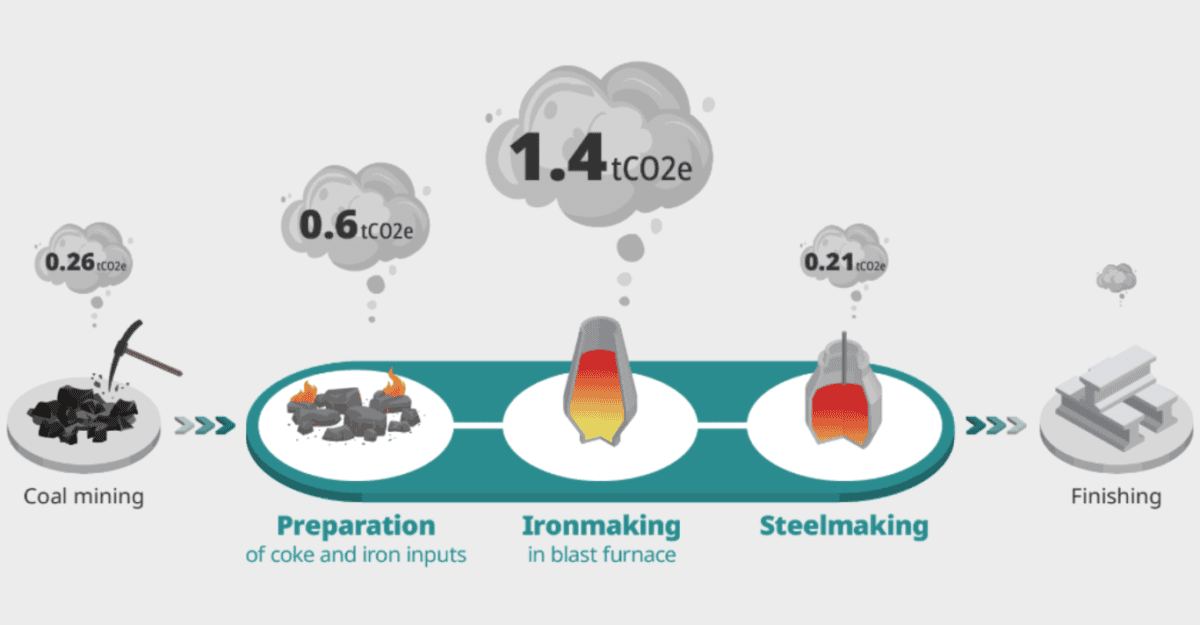
In a blast furnace, coal does much more than provide heat: it performs four essential functions. First, it is processed into a material called coke, which is rich in carbon. The coke then plays four roles: it removes oxygen from iron ore to produce iron, generates the heat needed to melt the materials, adds carbon to the iron, and provides the physical support that allows materials and gases to move through the furnace. This is why a blast furnace cannot simply be switched from coal to renewable electricity.
Not a Simple Technical Fix
Even though blast furnaces today are more efficient than older ones, they will always depend on coal and therefore emit high quantities of CO₂. We cannot stay within the 1.5C limit if we carry on manufacturing steel with iron produced in coal-based blast furnaces.

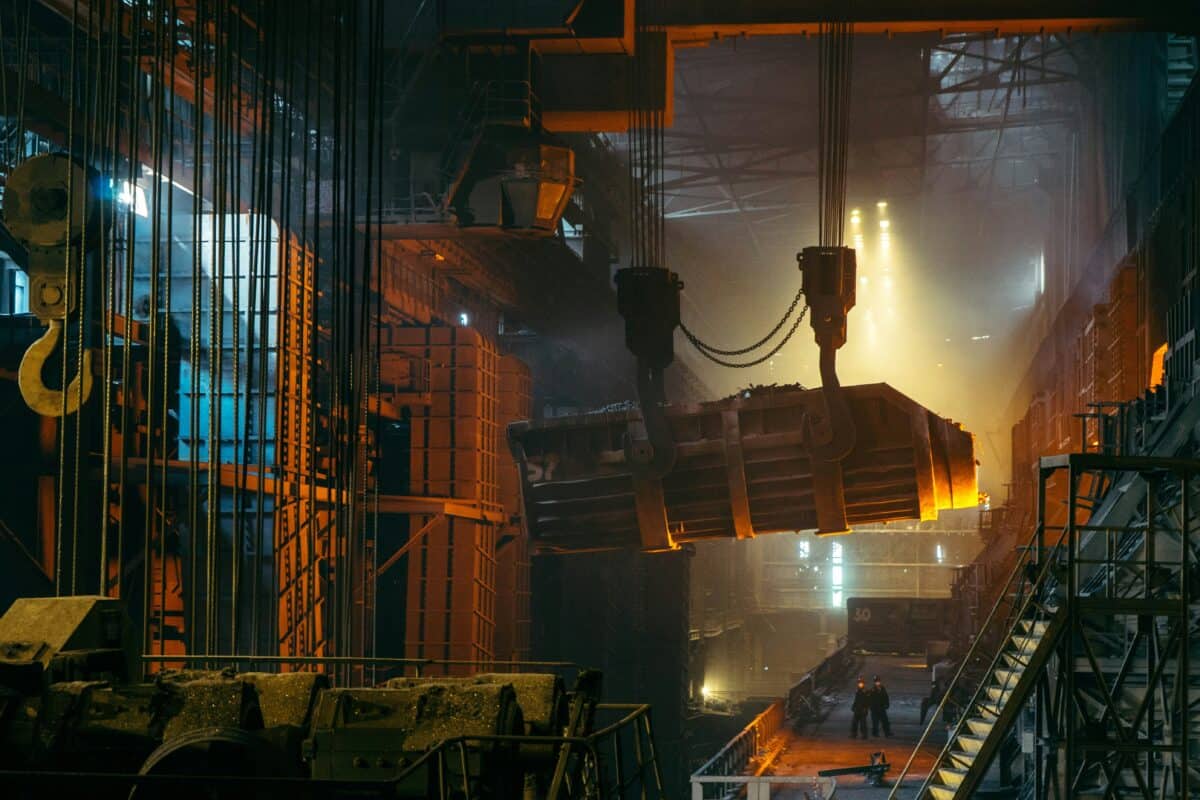
Blast furnaces need periodic major reinvestment in their heat-resistant brick lining, known as ‘relining’. Relining a blast furnace costs hundreds of millions of dollars and extends its life by 15- 20 years. Companies therefore face critical decisions to either lock in decades more emissions-intensive production or transition away from coal and toward near zero-emissions steelmaking.
Some steelmakers argue that carbon capture and storage (CCS) can keep blast furnaces running with lower emissions. But commercial-scale CCS on a blast furnace does not exist, pilots rarely cut emissions by more than 35%, and it does nothing to tackle the upstream methane emissions from coal mines. But more importantly, investing in CCS on a blast furnace only deepens dependence on coal and diverts precious effort and investment from near-zero emissions solutions.
Moving Steel Away from Coal
The good news is that steel does not have to be made this way. Steel’s climate impact can be greatly reduced by acting on four fronts:
- Transforming steel production processes, particularly how iron is made
- Increasing the share of steel production made from scrap
- Ensuring renewable energy is used for the electricity and heat consumed across all stages of steel production
- Producing and consuming less steel overall, including through more efficient material use across industrial supply chains
These approaches complement each other and each has an important role to play. There is not enough recycled iron and steel to meet demand so virgin iron will remain part of the mix. That makes transforming ironmaking the most critical step in decarbonisation.
The industry needs to move from iron production in blast furnaces to direct reduction of iron using green hydrogen. The resulting green iron can be loaded in an electric arc furnace, powered by renewable electricity, making the whole iron and steelmaking process from start to finish close to zero-emissions. None of this is easy but the pathway is clear. SteelWatch’s scorecard shows most major steelmakers are far from ready. What’s missing is ambition, leadership and investment from steelmakers, governments and investors alike.
The transformation requires a systems approach with industrial planning, energy and jobs moving together. That means steelmakers showing leadership by committing to no new blast furnaces or relinings, and making clear timebound plans for retirement of blast furnaces. It means a large-scale build out of renewable energy with green hydrogen prioritised for the steel sector over lower value uses. It means plans for workers and communities in steel towns built in from the start rather than added later. It also means policy that shapes demand for green steel, such as green public procurement, buyer commitments and finance tied to credible transition plans.
Steel is a strategic industry. But protecting steelmaking should not mean protecting its dependence on coal. The transition to green iron and renewable energy could redraw the map of global steel production, creating new opportunities for countries willing to invest in the industry of the future.