
The Energy Pioneer
No Result
View All Result
  • Home
  • Clean Tech
    • Electric Vehicles
    • Battery Storage
    • Energy Efficiency
    • Green Hydrogen
    • Smart Grid
  • Renewable Energy
    • Solar
    • Fossil Fuels
    • Hydrogen
    • Hydropower
    • Nuclear
    • Wind
  • Green Finance
    • Crash Course
    • Private Financing
    • Public Financing
    • Carbon Markets
  • Policy
  • Regions
    • Africa
    • Asia
    • West Asia
    • Latin America
    • North America
    • Europe
  • Features
  • Who We Are
    • About Us
    • Contact Us
    • EP Investing
  • Home
  • Clean Tech
    • Electric Vehicles
    • Battery Storage
    • Energy Efficiency
    • Green Hydrogen
    • Smart Grid
  • Renewable Energy
    • Solar
    • Fossil Fuels
    • Hydrogen
    • Hydropower
    • Nuclear
    • Wind
  • Green Finance
    • Crash Course
    • Private Financing
    • Public Financing
    • Carbon Markets
  • Policy
  • Regions
    • Africa
    • Asia
    • West Asia
    • Latin America
    • North America
    • Europe
  • Features
  • Who We Are
    • About Us
    • Contact Us
    • EP Investing
No Result
View All Result
The Energy Pioneer
No Result
View All Result
  • Home
  • Clean Tech
  • Green Finance
  • Policy
  • Renewable Energy
  • Regions
  • Features
  • Who We Are
Home Policy

The Potential of Agrivoltaics

byTyler Kimble
March 24, 2025
Reading Time: 4 mins read

Across the globe, rural areas struggle with grid interconnection and chronic energy instability, leading to widespread energy poverty. Distributed Generation (DG) solar and agrivoltaics offer enormous potential to close this energy accessibility gap. By generating power locally, these solutions can bring much-needed energy independence and agricultural resilience to underserved communities.  

RELATED POSTS

Decarbonizing Africa’s Road Passenger Transport

Unlocking Africa’s Renewable Potential with Battery Storage

The Financiers and Startups Decarbonizing Africa’s ‘Anti-Fossil’ Fuel Nation

Rural areas, in particular, face significant barriers to accessing reliable energy due to their distance from centralized generation sources. However, the rise of distributed generation solar has already helped meet some of these challenges. Through decentralized energy systems, communities can produce and consume power near the point of use, reducing reliance on a centralized utility, cutting transmission losses, and increasing overall efficiency.

Agrivoltaics, the dual use of land for both solar generation and agriculture, can amplify the benefits of DG solar – especially in rural economies dependent on farming. By integrating solar panels into agricultural land, farmers can generate clean energy while also protecting crops and livestock. The shade and cooling provided by solar arrays can reduce heat stress, preserve soil moisture, and promote biodiversity, creating a symbiotic relationship between energy and agriculture. Ultimately, agrivoltaics has the potential to enhance rural livelihoods while addressing chronic energy poverty. 

From The Energy Pioneer New memberships opening April 15, 2026

Meet EP Investing — capital discovery for the energy transition.

Visit EP Investing →

Mexico is an excellent candidate to leverage agrivoltaics. Rich in solar radiation, rural Mexico stands to gain significantly from DG solar projects. Mexican farmers could benefit from healthier crops, additional revenue streams through energy sales, and greater community energy independence. Yet, despite these opportunities, Mexico faces substantial regulatory and structural barriers to DG solar adoption. 

In conversation with Cecilia Aguillon, a solar industry specialist with experience across North and South America, she discussed her work advocating for DG in Latin America and highlighted these barriers. According to Aguillon, Mexico has struggled to adopt DG solar due to regulatory hurdles imposed by a centralized energy utility system and the political influence of oil and gas interests. An estimated 34% of Mexican households experience energy poverty, disproportionately impacting rural communities.
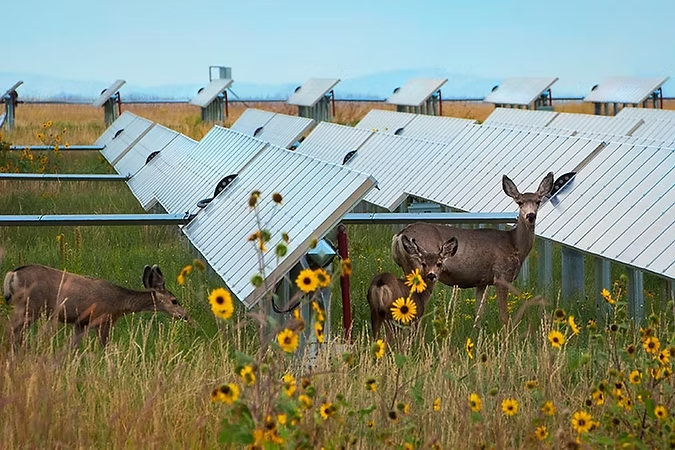
Deer Graze under the PV Array at NREL’s National Wind Technology Center: Photo by Dennis Schroeder, NREL

Aguillon then contrasted Mexico’s situation with Brazil, which has experienced rapid DG growth. Brazil now has over 36 GW of installed DG solar, accounting for over 67% of their installed solar energy, thanks to favorable policies like ANEEL’s Normative Resolution 83 and their net metering policy. By comparison, at the end of 2024, Mexico had only 4.42 GW of DG solar, highlighting how far behind it lags.

Although Mexico has passed a promising plan to add new power capacity, much of it focuses on large-scale solar projects that often bypass rural populations. While DG solar is included in Mexico’s energy roadmap, stringent permitting rules remain a significant barrier. Currently, small-scale self-supply can be done up to .7 MW without a permit,but anything above that – up to 20 MW – requires navigating a complex permitting process.

Buy JNews
ADVERTISEMENT

As emphasized by Aguillon, permitting and bureaucracy remain among the most significant barriers to scaling DG solar in Mexico. Other barriers include a lack of financing models for community-scale projects, the entrenched utility monopoly and fossil fuel lobbying, and a general lack of awareness among farmers and policymakers about DG solar and agrivoltaics. To overcome these hurdles, Aguillon recommends community ownership models for DG projects backed by government subsidies that could be repaid over time through energy sales. Integrating agrivoltaics into these projects could enhance their value by directly supporting agricultural productivity and combating climate risks.
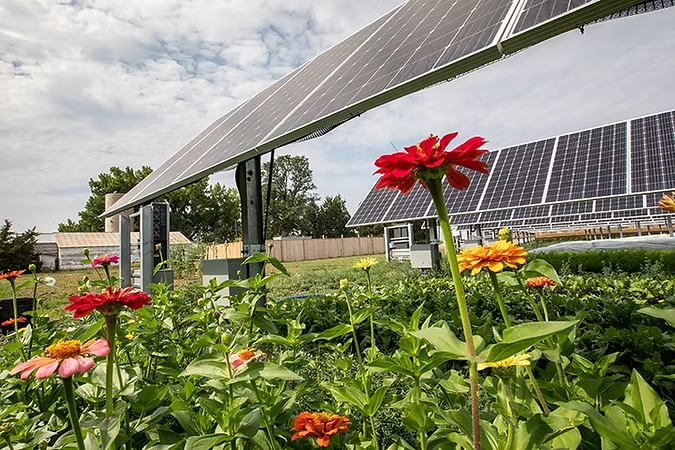
Flowers Growing to Attract Pollinators at Jack’s Solar Garden in Colorado: Photo by Werner Slocum, NREL

For this to succeed, Mexico would need to implement stronger government support and incentives for DG solar, possibly through public-private partnerships that address financing gaps. Policy reform is also critical—both to improve rural grid interconnections and to streamline the DG project permitting process. Additionally, farmer engagement and education around the benefits of agrivoltaics will be crucial to ensuring that DG solar reaches its full potential and delivers a meaningful impact on rural communities. 

Mexico has an opportunity to address both energy poverty and agricultural vulnerability by embracing distributed generation and agrivoltaics. Community-led, decentralized energy solutions can transform rural economies, providing energy independence while supporting farmers and strengthening local ecosystems. A stronger, more resilient energy future for Mexico –and for rural communities worldwide–lies in leveraging local resources, innovative land use, and community ownership to ensure no community is left behind in the energy transition.
From The Energy Pioneer New memberships opening April 15, 2026

Meet EP Investing — the platform behind the stories.

1,300+ companies · 350+ investors · 47+ grants

Visit EP Investing →
ShareTweetShare
Tyler Kimble

Tyler Kimble

Tyler is a freelance writer and entrepreneur based in Washington, DC, with a deep passion for sustainability and climate. He studied the intersection of business and sustainability at the University of Virginia, focusing on industrial symbiosis and closed-loop business strategies. He is particularly interested in emerging climate technologies, clean energy, and innovative decarbonization solutions. Through thoughtful and informative writing, Tyler aims to make complex sustainability challenges accessible and actionable.

Related Posts

Decarbonizing Africa’s Road Passenger Transport
Africa

Decarbonizing Africa’s Road Passenger Transport

March 3, 2026
Unlocking Africa’s Renewable Potential with Battery Storage
Solar

Unlocking Africa’s Renewable Potential with Battery Storage

February 25, 2026
The Financiers and Startups Decarbonizing Africa’s ‘Anti-Fossil’ Fuel Nation
Africa

The Financiers and Startups Decarbonizing Africa’s ‘Anti-Fossil’ Fuel Nation

February 16, 2026
Green Hydrogen in Tunisia: Ambitious Energy Strategy amidst Implementation Challenges
Africa

Green Hydrogen in Tunisia: Ambitious Energy Strategy amidst Implementation Challenges

February 13, 2026
Hurricane Melissa Shines Light on Jamaica’s Energy Sector
Renewable Energy

Hurricane Melissa Shines Light on Jamaica’s Energy Sector

February 10, 2026
The Race to Host AI: Data Centres in Water-Scarce India
Asia

The Race to Host AI: Data Centres in Water-Scarce India

February 9, 2026
Next Post
Takeaways from Uganda’s Updated Energy Policy

Takeaways from Uganda's Updated Energy Policy

Addressing EV Load Management

Addressing EV Load Management

Popular Stories

  • The Financiers and Startups Decarbonizing Africa’s ‘Anti-Fossil’ Fuel Nation

    The Financiers and Startups Decarbonizing Africa’s ‘Anti-Fossil’ Fuel Nation

    0 shares
    Share 0 Tweet 0
  • Decarbonizing Africa’s Road Passenger Transport

    0 shares
    Share 0 Tweet 0
  • Green Hydrogen in Tunisia: Ambitious Energy Strategy amidst Implementation Challenges

    0 shares
    Share 0 Tweet 0
  • South African Pension Funds Outshine $13 Billion Green Transition Funds

    0 shares
    Share 0 Tweet 0
  • Unlocking Africa’s Renewable Potential with Battery Storage

    0 shares
    Share 0 Tweet 0

Actionable Info

🔒 NEW MEMBERSHIPS OPEN APRIL 15
EP
EP Investing Climate Finance Intelligence

Our journalism is made possible by readers like you.

The founders, investors, and professionals reading The Energy Pioneer use EP Investing to find capital, partners, and opportunities.

1300+Companies
350+Investors
45+Grants
Explore EP Investing →

The Energy Pioneer

The Energy Pioneer covers the global energy transition — from clean tech and green finance to policy and renewable energy.

Recent Posts

  • Decarbonizing Africa’s Road Passenger Transport
  • Unlocking Africa’s Renewable Potential with Battery Storage
  • The Financiers and Startups Decarbonizing Africa’s ‘Anti-Fossil’ Fuel Nation

Categories

  • Africa
  • Asia
  • Battery Storage
  • Carbon Markets
  • Clean Tech
  • Crash Course
  • Electric Vehicles
  • Energy Efficiency
  • Features
  • Fossil Fuels
  • Green Finance
  • Green Hydrogen
  • Hydrogen
  • Hydropower
  • Latin America
  • North America
  • Nuclear
  • Policy
  • Private Financing
  • Public Financing
  • Renewable Energy
  • Smart Grid
  • Solar
  • West Asia

Quick Links

  • Home

© 2026 The Energy Pioneer | All Rights Reserved. |

No Result
View All Result
  • Home
  • Clean Tech
    • Electric Vehicles
    • Energy Efficiency
    • Green Hydrogen
    • Smart Grid
    • Battery Storage
  • Green Finance
    • Public Financing
    • Private Financing
    • Carbon Markets
  • Policy
  • Renewable Energy
    • Wind
    • Solar
    • Hydropower
    • Nuclear
    • Hydrogen
    • Fossil Fuels
    • Geothermal
  • Regions
    • Africa
    • Asia
    • Europe
    • North America
    • Latin America
    • West Asia
  • Features
  • Who We Are
    • About Us
    • EP Investing
    • Contact Us

© 2026 The Energy Pioneer | All Rights Reserved. |