
The Energy Pioneer
No Result
View All Result
  • Home
  • Clean Tech
  • Renewable Energy
  • Green Finance
    • Crash Course
    • Private Financing
    • Public Financing
    • Carbon Markets
  • Policy
  • Regions
    • Africa
    • Asia
    • West Asia
    • Latin America
    • North America
    • Europe
  • Features
  • Who We Are
    • About Us
    • Contact Us
    • EP Investing
  • Home
  • Clean Tech
  • Renewable Energy
  • Green Finance
    • Crash Course
    • Private Financing
    • Public Financing
    • Carbon Markets
  • Policy
  • Regions
    • Africa
    • Asia
    • West Asia
    • Latin America
    • North America
    • Europe
  • Features
  • Who We Are
    • About Us
    • Contact Us
    • EP Investing
No Result
View All Result
The Energy Pioneer
No Result
View All Result
  • Home
  • Clean Tech
  • Green Finance
  • Policy
  • Renewable Energy
  • Regions
  • Features
  • Who We Are
Home Clean Tech

The Push for Grid Modernization

Otto GundersonbyOtto Gunderson
April 1, 2026
Reading Time: 4 mins read

One of the most significant points of contention as the world moves to a more renewable-based energy generation mix is the need for grid modernization, allowing for higher power distribution and generation levels. Grid modernization will only become more critical as electric vehicles enter the market and data centers are built. After more than 15 years of consistent energy demand in the US, we are finally starting to see an increase. While power needs have remained relatively consistent since 2007, the energy demand of data centers, electric vehicle charging infrastructure, and domestic manufacturing will result in a compound annual growth rate for power demand of over 20% until 2030. 

RELATED POSTS

Iran War Triggers Oil Shock as Zimbabwe Turns to Ethanol Blending

Africa’s EV Future May Depend on Electrifying the Informal Sector

The Modular Approach to Direct Air Capture

A report by McKinsey & Company on the growth of data centers found that the power required by data centers will triple current capacity by 2030. This reflects a rise from 3-4% of US power demand to 11-12%. This report expands on the constraints of data centers placed on them by the power sector. These include limitations on power sources, upstream infrastructure for power access, and power sustainability. 

Vic Shao, founder and CEO of DC Grid, spoke about how providing DC (direct current) generation could be an option for such a scenario. He outlined how today’s world may not need to rely on the same AC power grid of the past. Renewable energy is generated in direct current, and many of the large off-takers of the future, whether they be DC fast chargers, data centers, or decarbonization of industries like steel, will require an immense power supply. Vic further outlined the technical benefits of using a DC power grid. By removing the process necessary for converting DC to AC power, generators could save as much as 20% of potentially lost power. This number could be even higher when conductive and heat-related losses are considered.
From The Energy Pioneer New memberships opening April 15, 2026

Meet EP Investing — capital discovery for the energy transition.

Visit EP Investing →
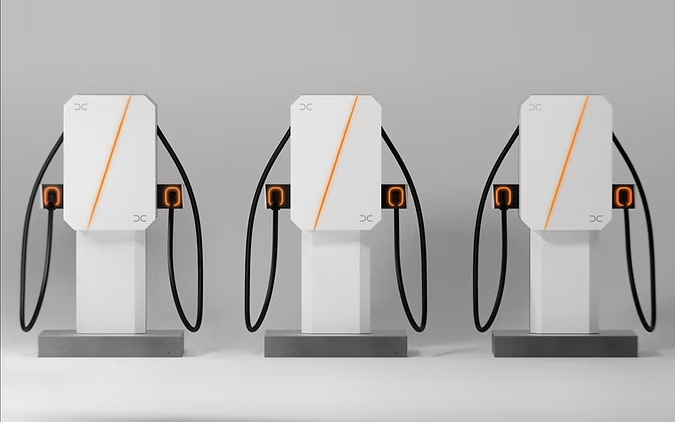
DC Fast Chargers: Photo Provided by DC Grid

As the reliance on the grid continues to grow, large-scale users may not want to be wholly reliant on the power grid for access to energy. In the past, some large users have been asked to limit usage during high demand. Additionally, the delay in getting power connections is increasing in California, Arizona, and Virginia data center hubs. The US Energy Information Administration found that the continued investment by utilities to produce and deliver electricity rose 12% from 2003 to 2023. This was driven by replacing or upgrading aging infrastructure, battery storage projects, renewable energy projects, and new lines to these renewable projects. Interestingly, the rise in total cost can be attributed more to distribution than production. From 2003 to 2023, production spending fell by 24%. By contrast, that same period saw an increase of 160% in investment in distribution infrastructure.

A US Department of Energy Report on the topic spoke about the impact of having a “smart grid” capable of using improved technologies and controls to improve resilience and reduce the effects of outages and weather impacts. The technologies required for smart grid work use two-way communication and sensors, allowing for better grid stability monitoring. A leading company in this field, Buzz Solutions, recognized this need for more information on stability resiliency from the grid and incorporated AI tools to improve grid transmission and distribution. I was fortunate enough to speak with Buzz Solutions founders Kaitlyn Albertoli and Vikhyat Chaudhry on the need for grid infrastructure improvements. Perhaps the most important takeaway from this discussion was the emphasis on just how outdated aspects of the grid have become. Built in the 20th century, there are significant areas that are 45 and 50 years old. Kaitlyn and Vik emphasized the new goals that have been set for renewable generation and strains from off-grid projects and electric vehicles coming online.
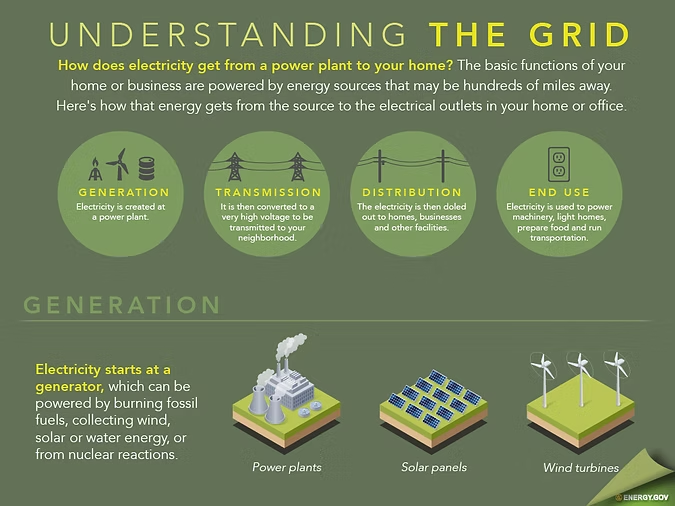
Infographic on Transmission: Photo Provided by US DoE

Both the incorporation of DC technologies and improved intelligence gathering for grid resiliency are mentioned in the Grid Modernization Strategy published by the Department of Energy. Investment in the grid is not simply building but improving existing infrastructure. In the case of DC Grid, this may mean that certain aspects of the grid that are putting undue strain on transmission, such as EV charging, could incorporate direct current solutions. As for the current grid infrastructure, there needs to be a quick and efficient way to update it. As I constantly find myself saying when writing on issues as significant as the US energy grid, there is no silver bullet.
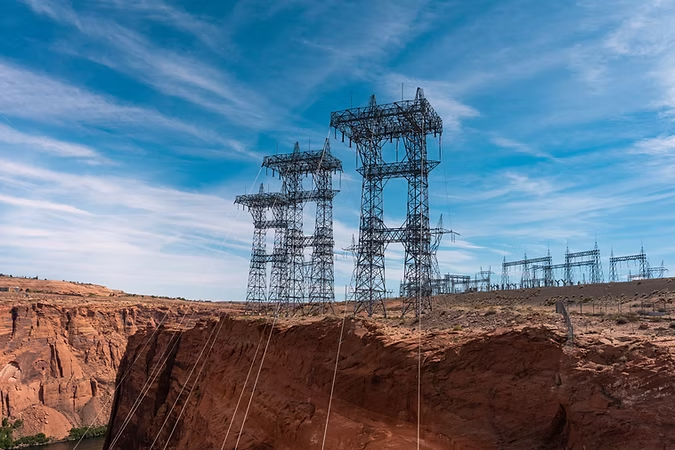

Grid Transmission Network
Buy JNews
ADVERTISEMENT
From The Energy Pioneer New memberships opening April 15, 2026

Meet EP Investing — the platform behind the stories.

1,300+ companies · 350+ investors · 47+ grants

Visit EP Investing →
ShareTweetShare
Otto Gunderson

Otto Gunderson

Otto Gunderson has been working in clean energy for the last 7 years, with the last two being spent split between South America, Africa, and Southeast Asia, reporting on the transition to clean energy. After traveling and writing for two years, he founded The Energy Pioneer to create a news outlet with a global approach to clean energy journalism. He particularly enjoys writing about entrepreneurship, investment, and innovations that are contributing to greenhouse gas reduction and clean energy development.

Related Posts

Iran War Triggers Oil Shock as Zimbabwe Turns to Ethanol Blending
Renewable Energy

Iran War Triggers Oil Shock as Zimbabwe Turns to Ethanol Blending

April 8, 2026
Africa’s EV Future May Depend on Electrifying the Informal Sector
Clean Tech

Africa’s EV Future May Depend on Electrifying the Informal Sector

March 31, 2026
The Modular Approach to Direct Air Capture
Clean Tech

The Modular Approach to Direct Air Capture

April 1, 2026
Lithium Lockdown: Zimbabwe’s Big Bet on Local Processing
Clean Tech

Lithium Lockdown: Zimbabwe’s Big Bet on Local Processing

April 1, 2026
Caught Between India’s Military Ambitions and Green Promises: The Future of the Andaman and Nicobar Islands
Renewable Energy

Caught Between India’s Military Ambitions and Green Promises: The Future of the Andaman and Nicobar Islands

March 19, 2026
Decarbonizing Africa’s Road Passenger Transport
Africa

Decarbonizing Africa’s Road Passenger Transport

April 1, 2026
Next Post
Another Setback for Green Hydrogen in UAE

Another Setback for Green Hydrogen in UAE

Impact Investing in Latin America

Impact Investing in Latin America

Popular Stories

  • Caught Between India’s Military Ambitions and Green Promises: The Future of the Andaman and Nicobar Islands

    Caught Between India’s Military Ambitions and Green Promises: The Future of the Andaman and Nicobar Islands

    0 shares
    Share 0 Tweet 0
  • Two Paths Forward: How The Iran Conflict Is Reshaping the Energy Sector

    0 shares
    Share 0 Tweet 0
  • The Race to Host AI: Data Centres in Water-Scarce India

    0 shares
    Share 0 Tweet 0
  • The Modular Approach to Direct Air Capture

    0 shares
    Share 0 Tweet 0
  • Africa’s EV Future May Depend on Electrifying the Informal Sector

    0 shares
    Share 0 Tweet 0

Actionable Info

🔒 NEW MEMBERSHIPS OPEN APRIL 15
EP
EP Investing Climate Finance Intelligence

Our journalism is made possible by readers like you.

The founders, investors, and professionals reading The Energy Pioneer use EP Investing to find capital, partners, and opportunities.

1300+Companies
350+Investors
45+Grants
Explore EP Investing →

The Energy Pioneer

The Energy Pioneer covers the global energy transition — from clean tech and green finance to policy and renewable energy.

Recent Posts

  • What is Green Islamic Finance and How Could it Accelerate the Renewable Energy Transition?
  • Iran War Triggers Oil Shock as Zimbabwe Turns to Ethanol Blending
  • Hybrid Renewables for Sustainable Electrification in the Sundarbans

Quick Links

  • Home
  • Clean Tech
  • Renewable Energy
  • Green Finance
  • Policy
  • Regions
  • Features
  • Who We Are

© 2026 The Energy Pioneer | All Rights Reserved. |

No Result
View All Result
  • Home
  • Clean Tech
    • Electric Vehicles
    • Energy Efficiency
    • Green Hydrogen
    • Smart Grid
    • Battery Storage
  • Green Finance
    • Public Financing
    • Private Financing
    • Carbon Markets
  • Policy
  • Renewable Energy
    • Wind
    • Solar
    • Hydropower
    • Nuclear
    • Hydrogen
    • Fossil Fuels
    • Geothermal
  • Regions
    • Africa
    • Asia
    • Europe
    • North America
    • Latin America
    • West Asia
  • Features
  • Who We Are
    • About Us
    • EP Investing
    • Contact Us

© 2026 The Energy Pioneer | All Rights Reserved. |