
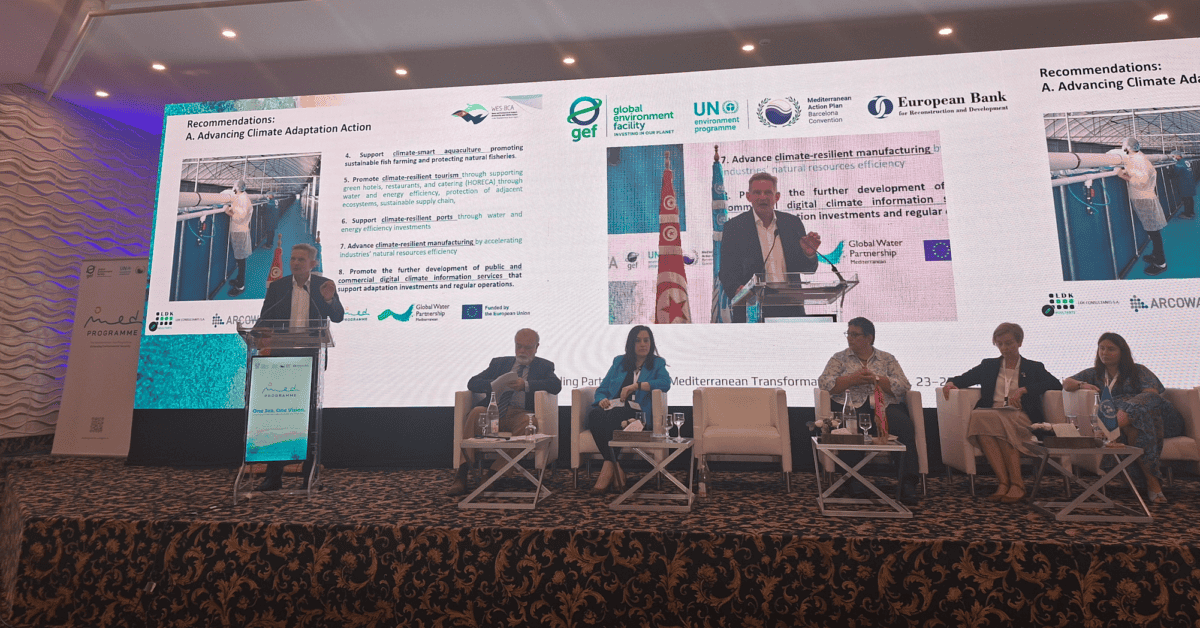
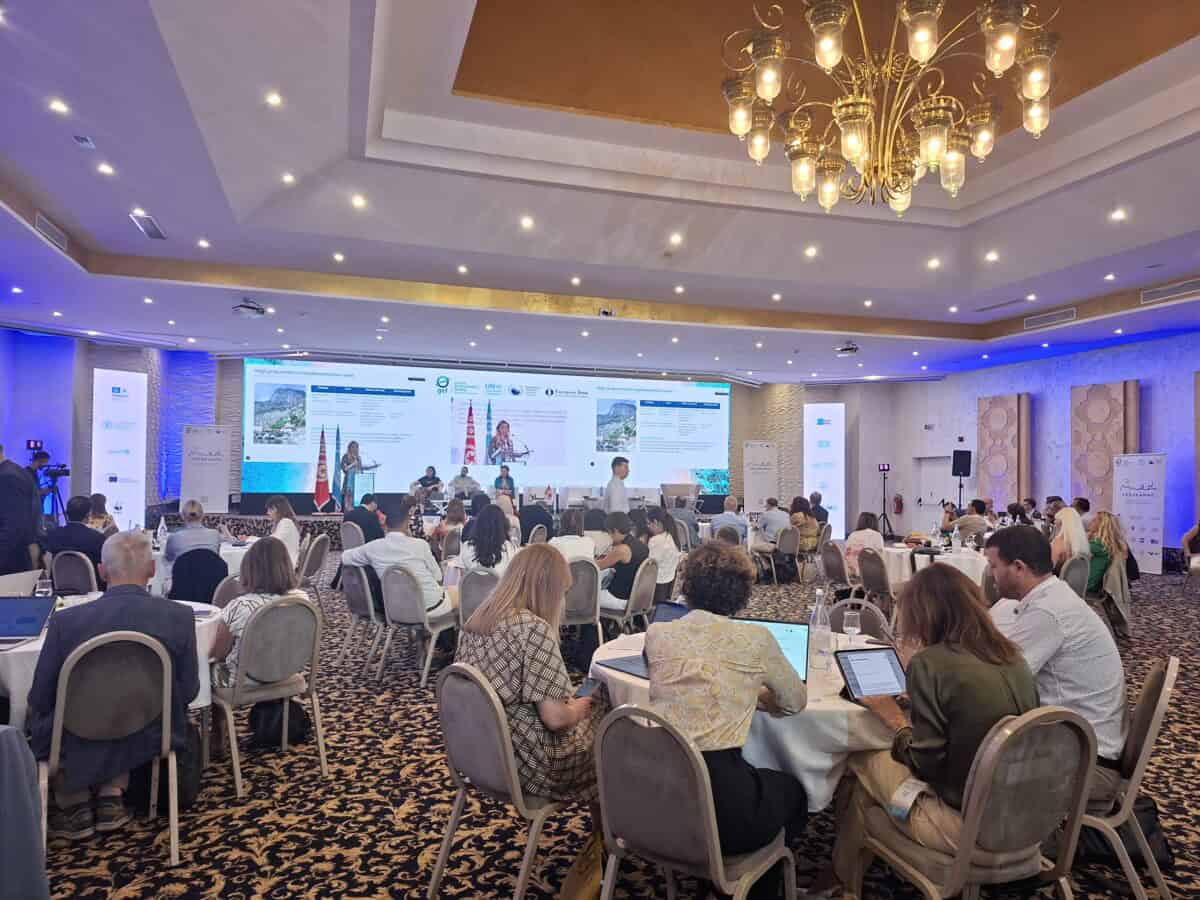
The launch of the MedProgramme Replication Portfolio emerged as the central milestone of the Fourth Annual Stocktaking Meeting (ASM) of the MedProgramme, held in Gammarth, Tunisia, in the last week of June.
“One Sea, One Vision: Scaling Partnerships for Mediterranean Transformation and Impact” was the theme of the conference, and the portfolio was introduced as a practical mechanism to scale successful environmental solutions across the Mediterranean by aligning country priorities with investment opportunities and partner support.
The MedProgramme is a regional initiative led by the United Nations Environment Programme (UNEP/MAP) and funded by the Global Environment Facility (GEF). It supports Mediterranean countries in addressing environmental challenges through projects focused on biodiversity conservation, pollution reduction, climate resilience, sustainable water management, and the promotion of innovative, scalable solutions across the region.
The three-day gathering brought together government representatives, international organizations, technical experts, youth delegates, and development partners to review the programme’s achievements and discuss pathways for sustaining its legacy beyond the project’s completion.
Following the launch session, participants explored how scientific knowledge, data, and technical expertise can be translated into policy action, planning processes, and investment-ready solutions. Discussions also highlighted the role of innovation and digital transformation in strengthening evidence-based decision-making, improving reporting systems, increasing visibility, and accelerating the replication of successful environmental initiatives across the region.
On the first day, delegates reflected on the MedProgramme’s achievements in fostering integration among child projects, institutions, and environmental focal areas. Sessions examined lessons learned in coordination, regional governance, policy development, and institutional cooperation, with discussions contributing to the development of the Tunis Call for Action.
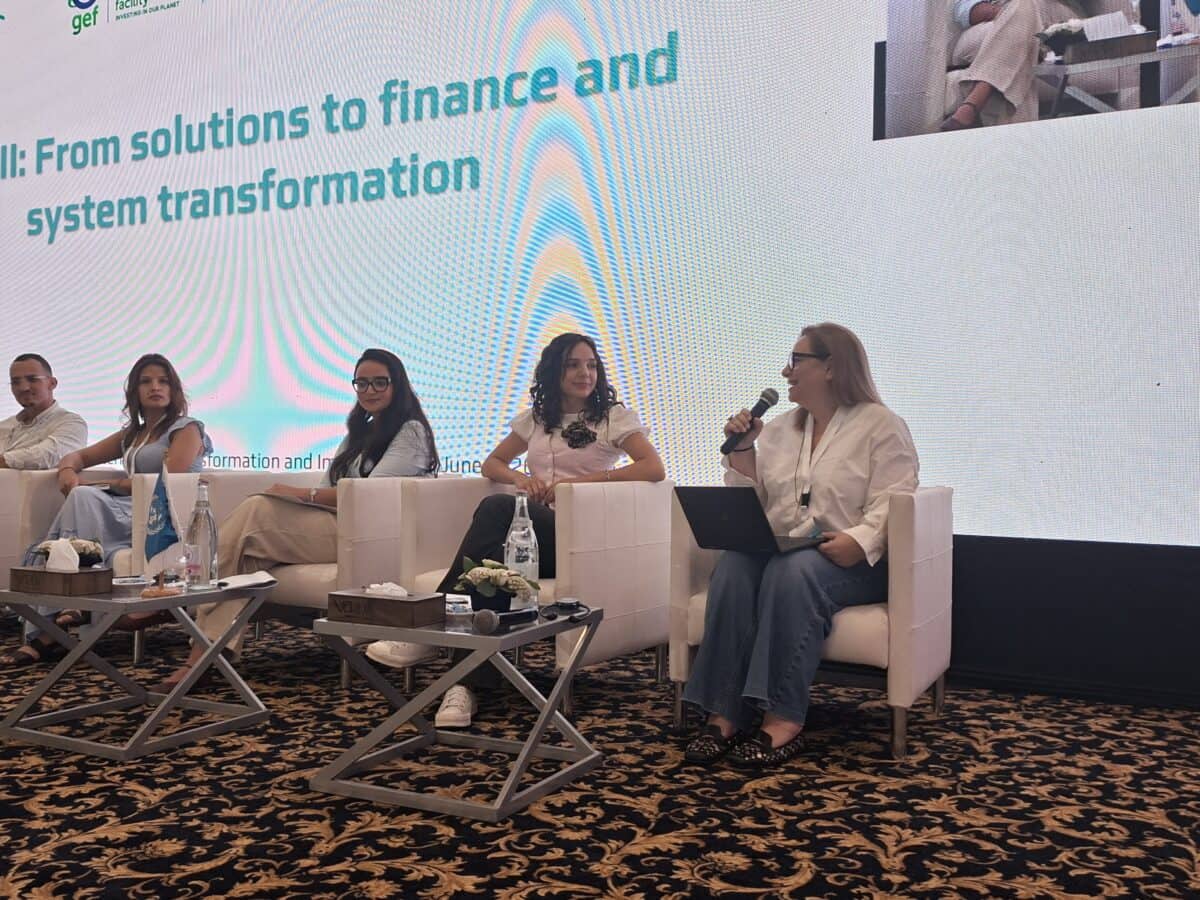
The final day focused on translating solutions into long-term impact through financing and partnerships. Participants worked in breakout groups to identify fast-track replication pathways, including policy entry points, financing mechanisms, and implementation partners. They discussed sustainable finance, private-sector engagement, and investment readiness as critical elements for scaling environmental solutions throughout the Mediterranean.

The meeting concluded with a closing session that presented key outcomes, youth recommendations, and next steps for regional cooperation, linking the MedProgramme’s legacy to future Mediterranean environmental action.
Speaking to The Energy Pioneer, Sarra Touzi, representative of Global Water Partnership-Med, highlighted a project currently being developed in Morocco’s Tangier-Tetouan-Al Hoceima region that integrates renewable energy, water efficiency, climate-smart agriculture, and environmental sustainability. The project involves the installation of floating solar panels on the Oued Makhazine Dam to power irrigation systems while improving water-use efficiency through climate-smart agricultural practices.
According to Touzi, placing solar panels on a water surface offers multiple environmental benefits, including cooling the panels and reducing water evaporation. At the same time, using solar energy for water pumping helps cut carbon emissions associated with conventional energy sources.
She explained that feasibility studies for the project began in September last year and have already led to the preparation of a project concept note, which has been submitted to the Green Climate Fund. The initiative has also received support from the regional authorities of Tangier-Tetouan-Al Hoceima and is currently in the resource mobilization phase to secure the financing required for implementation.
The planned solar power facility is expected to have a capacity of 32 MW. Touzi noted that the project could reduce water consumption by around 20% while increasing agricultural productivity by approximately 30%, based on the results of a similar pilot initiative implemented under the MedProgramme in Ghar El Melh, Bizerte, Tunisia.
Commenting on the launch of the Replication Portfolio, Touzi said it represents a major opportunity to accelerate the transfer of successful environmental solutions across the Mediterranean. “By documenting lessons learned and connecting projects with potential partners and financiers, the portfolio can help scale impact and support countries in achieving their climate, water, and biodiversity goals,” she said.
Regarding Egypt’s participation in the MedProgramme Annual Stocktaking Meeting in Tunis, Dr. Sara Zouriq, representing the Ministry of Water Resources and Irrigation, highlighted the Ministry’s interest in exploring opportunities for future water-related projects under the Global Environment Facility, including the upcoming GEF-9 cycle.
She noted that the Ministry is currently advancing the second generation of water management in Egypt, known as Water System 2.0, which aims to modernize the water sector through digital transformation, smart water management, improved governance, climate resilience, Nature-Based Solutions, monitoring and early warning systems, and data-driven decision-making.
Dr. Zouriq explained that the Ministry’s proposed priorities for future cooperation are aligned with this national direction and with the Sustainable Development Goals. These priorities focus on protecting Egypt’s limited water resources and enhancing climate-resilient coastal protection and asset management.
Dr. Zouriq also expressed the Ministry’s interest in continuing technical cooperation with the GEF, UNEP/MAP, development partners, relevant international organizations, and other stakeholders to further develop these concepts into practical projects that support sustainable development and deliver tangible impact.
According to the MedProgramme Results and Impact Report, the initiative has leveraged more than USD 700 million in co-financing while supporting environmental action across 10 Mediterranean countries.