

Grace Aab is the winner of The Energy Pioneer’s Undergraduate Article Competition.
Green and Grey Hydrogen
Hydrogen is often touted as a low-carbon fuel source with the potential to supply a significant amount of energy in place of fossil fuels. Currently, hydrogen is produced primarily through the electrolysis of water, better known as green hydrogen, and the steam reforming of fossil fuels, known as grey hydrogen.
The former requires government subsidies to encourage its development due to its reliance on expensive, energy-intensive equipment compared with more established energy sources. The US Department of Energy estimates the cost of producing green hydrogen at approximately USD 5-7 per kilogram without subsidies, equivalent to roughly USD 150-210 per MWh based on hydrogen’s lower heating value. By comparison, the 2026 levelized cost of electricity for utility-scale solar is estimated at USD 40-98 per MWh, while that of combined-cycle natural gas is USD 51-129 per MWh. These figures illustrate the relatively high cost of green hydrogen compared with established forms of energy generation.
Grey hydrogen by comparison still relies on fossil fuel extraction and produces carbon dioxide, which makes it unappealing to those looking for a low carbon energy source.
The Potential of White Hydrogen
But these are not the only available ways to acquire hydrogen. White hydrogen, which is a term used to describe naturally occurring hydrogen deposits in the subsurface formed via geologic processes, has been gaining industrial and academic attention in recent years as a potential hydrogen source.

Estimates of naturally occurring hydrogen underground remain highly uncertain, but modelling suggests that the recoverable resource could contain roughly twice as much energy as all proven natural gas reserves worldwide.
The United States Geological Survey published an article in 2025 detailing potential areas of interest for white hydrogen exploration in the form of prospectivity maps for the three main components of a system: sources, reservoirs, and traps.
Although hydrogen moves through rock more easily than hydrocarbons, many of the same principles used to extract petroleum still apply. Historically, the oil and gas industry has focused on finding petroleum rather than naturally occurring hydrogen. As a result, hydrogen was rarely measured during conventional drilling, leaving gaps in the data needed to understand where it occurs and how much may be recoverable. Now, as more start-ups and initiatives explore white hydrogen, the industry can draw on established oil and gas expertise to accelerate exploration and extraction.
How to Generate White Hydrogen
There are several processes that generate hydrogen in the subsurface, including: serpentinization, radiolysis, and deep hydrogen, amongst others. Serpentinization occurs when water reacts with iron-rich, typically volcanic, rocks under certain underground conditions, producing hydrogen gas. This has been the favored method of production thus far. HyTerra is an American company currently focused on acquiring white hydrogen from the mid-continental rift in Kansas.
MAX Power Mining, a Canadian company aiming for large-scale white hydrogen commercialization, drilled their first hydrogen well in Saskatchewan in 2025. Serpentinization is also believed to be the primary source of hydrogen in the rocks of the Souroukoto Group in Mali, which has supplied the village of Bourakebougou with energy for over ten years.
Setbacks of Serpentinization
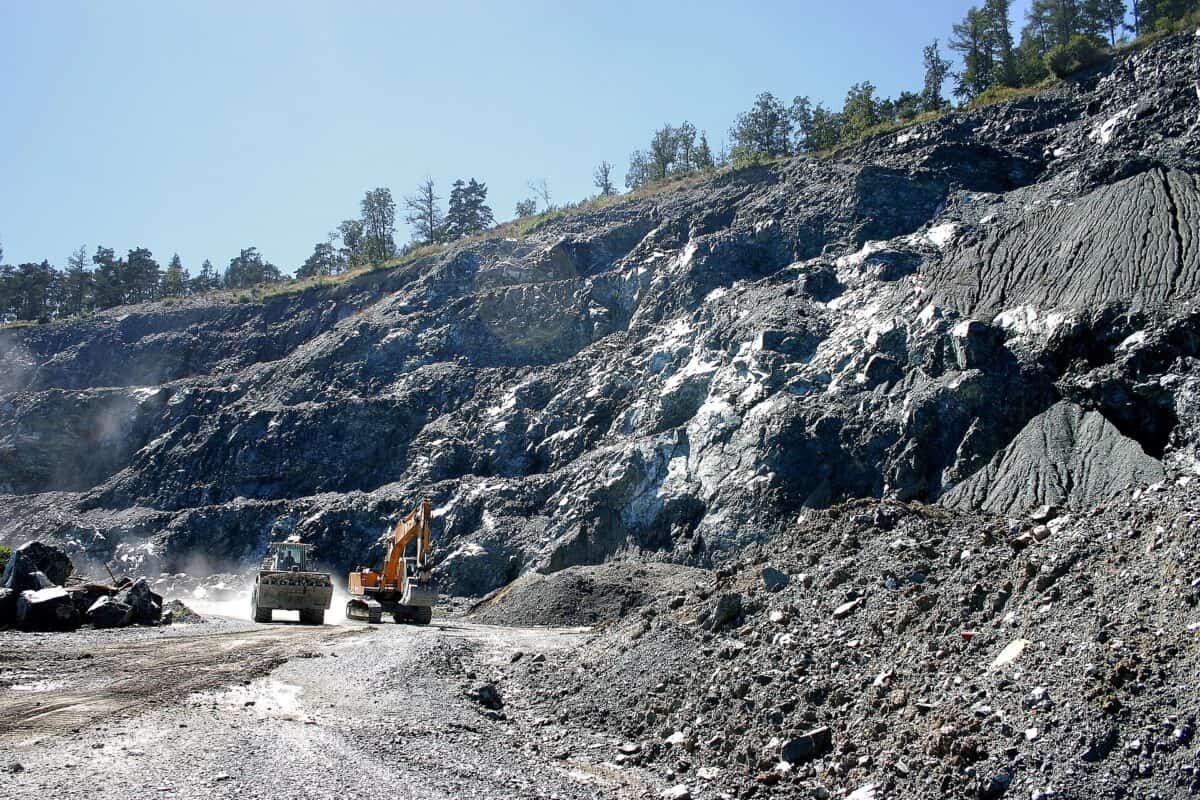
However, serpentinization is not a continuous process—once the rocks have been oxidized, hydrogen production stops. This creates two problems: lifespan of well sites, and residence time. If a well can only supply hydrogen short-term, then new well sites will need to continuously be found and drilled to fulfill demand.
Residence time accounts for how long a material can stay in place. Hydrogen is buoyant, so it moves upwards through the overlying rock and can eventually escape into the atmosphere. It is also difficult to contain without a very tight seal due to the molecule’s small size. This means that hydrogen generated by serpentinization can escape over time if it is not effectively trapped underground.
Radiolytic hydrogen
Radiolytic hydrogen, which forms when naturally occurring radiation splits water molecules, may address this problem through continuous generation. As long as water and naturally radioactive elements are present together underground, radioactive decay can continue to produce hydrogen. Although hydrogen production depends on the availability of these materials and underground conditions, radiolysis can generate hydrogen over timescales of hundreds of millions to billions of years, much longer than many serpentinization processes.
Radioactive elements such as potassium-40, thorium-232 and uranium-238 have half-lives of billions of years, allowing them to release radiation over long periods. Researchers have developed models to estimate how much hydrogen this radiation can generate in different types of rock. Although interest in radiolytic hydrogen as a potential fuel source is growing, many of these models were originally developed to investigate whether radiation-driven hydrogen production could support subsurface microbial life on other planets.
Deep Hydrogen
Deep hydrogen is a potential source of white hydrogen in Earth’s mantle and deep crust. Some theories suggest that this hydrogen was retained from Earth’s formation and is now gradually migrating towards the surface, rather than being generated by ongoing chemical reactions. Hydrogen inclusions found in diamonds formed deep within the mantle have been cited as evidence that hydrogen exists at these depths. However, its origins, movement and potential for commercial extraction remain poorly understood. As a result, although deep hydrogen could represent a future energy source, its practical potential for current exploration and extraction remains uncertain.
Future Developments
While white hydrogen is still in its infancy of development as an industry, it has a growing number of people dedicated to increasing our understanding of both its production and how it is stored in the subsurface. Future research into the various sources of white hydrogen will provide more concrete estimations into the viability of this fuel source to minimize our current fossil fuel dependence.