
The Energy Pioneer
No Result
View All Result
  • Home
  • Clean Tech
    • Electric Vehicles
    • Battery Storage
    • Energy Efficiency
    • Green Hydrogen
    • Smart Grid
  • Renewable Energy
    • Solar
    • Fossil Fuels
    • Hydrogen
    • Hydropower
    • Nuclear
    • Wind
  • Green Finance
    • Crash Course
    • Private Financing
    • Public Financing
    • Carbon Markets
  • Policy
  • Regions
    • Africa
    • Asia
    • West Asia
    • Latin America
    • North America
    • Europe
  • Features
  • Who We Are
    • About Us
    • Contact Us
    • EP Investing
  • Home
  • Clean Tech
    • Electric Vehicles
    • Battery Storage
    • Energy Efficiency
    • Green Hydrogen
    • Smart Grid
  • Renewable Energy
    • Solar
    • Fossil Fuels
    • Hydrogen
    • Hydropower
    • Nuclear
    • Wind
  • Green Finance
    • Crash Course
    • Private Financing
    • Public Financing
    • Carbon Markets
  • Policy
  • Regions
    • Africa
    • Asia
    • West Asia
    • Latin America
    • North America
    • Europe
  • Features
  • Who We Are
    • About Us
    • Contact Us
    • EP Investing
No Result
View All Result
The Energy Pioneer
No Result
View All Result
  • Home
  • Clean Tech
  • Green Finance
  • Policy
  • Renewable Energy
  • Regions
  • Features
  • Who We Are
Home Africa

Takeaways from Uganda’s Updated Energy Policy

byPatrick Masendi
March 26, 2025
Reading Time: 6 mins read

Advancing Universal Energy Access, Renewable Energy, Clean Cooking, and Industrial Growth for Uganda’s Sustainable Future.

RELATED POSTS

Decarbonizing Africa’s Road Passenger Transport

The Financiers and Startups Decarbonizing Africa’s ‘Anti-Fossil’ Fuel Nation

Green Hydrogen in Tunisia: Ambitious Energy Strategy amidst Implementation Challenges

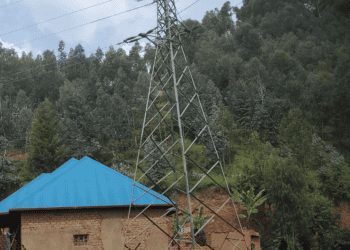
Uganda’s Energy Policy 2023 outlines an ambitious goal of achieving universal access to sustainable, affordable, and quality energy services by 2040. With an electricity access rate of 58% as of Jan 2025 (2 million households connected), Uganda has made significant progress but still faces challenges, particularly in rural electrification, where the access rate is still about 20%. The government’s strategy integrates grid expansion, off-grid solutions, and renewable energy innovations to ensure equitable energy access for all Ugandans. Despite improvements, a significant energy gap remains between urban and rural communities. Urban electricity access stands at over 60%, while rural areas lag at 18-20%. The policy prioritizes off-grid solar, mini-grids, and standalone home systems to accelerate electrification in remote communities where extending the national grid is costly and slow. Uganda’s energy mix is dominated by hydropower 84%, solar 4%, biofuel 7%, and thermal electricity 7%, but the government is expanding solar PV, geothermal, and wind energy to enhance reliability and resilience.

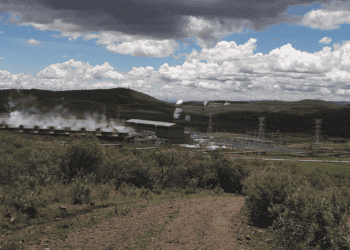
To address affordability barriers, Uganda is implementing a free electricity connection policy where eligible households receive subsidized access to the grid. Additionally, pay-as-you-go solar models allow low-income households to make small payments over time, making off-grid solutions more financially accessible. Uganda’s approach to universal electrification aligns with SDG 7 (Affordable and Clean Energy for All) and serves as a model for other developing nations. The country presents investment opportunities in scaling mini-grid projects, clean energy initiatives, and last-mile electrification, positioning itself as a leader in sustainable energy access in Africa. As climate change concerns grow, Uganda is prioritizing renewable energy expansion as a key pillar of its Energy Policy 2023. The policy aligns with SDG 13 (Climate Action) and Uganda’s commitments under the Paris Agreement to reduce CO₂ emissions by investing in solar, wind, geothermal, and additional hydropower projects. While hydropower dominates Uganda’s electricity generation, the policy encourages diversification into solar, wind, and geothermal energy to enhance grid stability and energy security. Uganda has solar potential exceeding 5 kWh/m²/day, which is ideal for utility-scale solar farms, commercial and industrial, as well as decentralized solar home systems. Additionally, the country has over 1,500 MW of geothermal potential, which remains largely untapped.
From The Energy Pioneer New memberships opening April 15, 2026

Meet EP Investing — capital discovery for the energy transition.

Visit EP Investing →
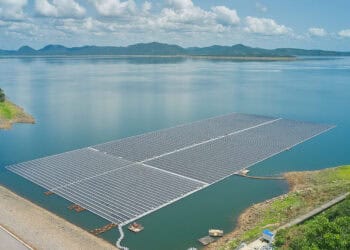
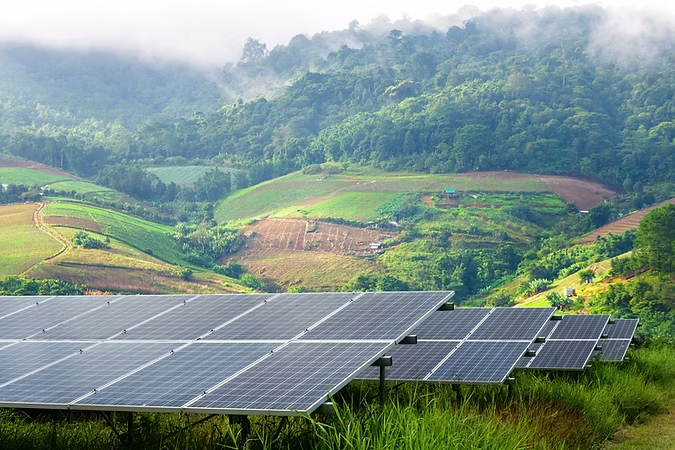
The potential of solar power in Uganda, especially to bring energy to areas currently unconnected to the transmission grid, is immense.

The policy also promotes energy efficiency programs, clean cooking solutions, and electric mobility initiatives to reduce the country’s carbon footprint. Uganda is exploring electric buses, solar-powered irrigation systems, and green hydrogen projects to accelerate its transition to a low-carbon economy. With increasing global interest in carbon credits, climate financing, and green energy investments, Uganda presents a viable market for renewable energy investors. The government offers feed-in tariffs, tax breaks, and financial incentives to attract private sector participation. By expanding renewable energy capacity, Uganda is improving sustainability, creating jobs, reducing energy costs, and enhancing energy security. Its commitment to renewable energy expansion strengthens its position as a green energy hub in Sub-Saharan Africa.

As far as cooking is concerned, over 90% of Ugandans rely on biomass in the form of firewood and charcoal, leading to deforestation, indoor air pollution, and health hazards. The Energy Policy of 2023 prioritizes clean cooking solutions, targeting a shift to LPG, biogas, electric cooking, ethanol stoves, and improved biomass cookstoves. Traditional cooking methods contribute to respiratory diseases, disproportionately affecting women and children. The policy integrates clean cooking as a public health and environmental priority, recognizing the urgent need to curb deforestation. Uganda loses 2.6% of its forests annually due to unsustainable charcoal production, a trend the government aims to reverse. The government is promoting LPG subsidies, incentivizing electric cooking, and subsidizing electric pressure cookers through the Uganda Energy Credit Capitalisation Company (UECCC).

Additionally, efficient biomass stoves are distributed in low-income communities to reduce firewood use by up to 60%. Uganda‘s clean cooking sector presents major investment opportunities in LPG distribution, biogas production, ethanol fuel development, and carbon credit markets. The government has introduced tax exemptions and financing schemes to encourage private sector participation. Uganda’s clean cooking strategy is a transformational initiative that improves health, reduces deforestation, and empowers women. By investing in modern cooking solutions, Uganda is setting the stage for a sustainable and healthier future.

The 2023 Energy Policy recognizes electricity as a key driver of industrialization and economic growth. With an increasing focus on manufacturing, Agro-processing, and digital industries, the policy prioritizes reliable and affordable energy supply for businesses. The policy aims to boost power generation to over 52,000 MW by 2040 (currently installed capacity stands at 2,049 MW), ensuring a stable energy supply for industries. A special focus has been put on industrial parks, agricultural value chains, and digital infrastructure to drive economic expansion. Uganda is also promoting energy-efficient technologies in industries to reduce costs and improve competitiveness. Initiatives include smart meters, demand-side management, and incentives for energy-saving equipment. With a focus on energy reliability, Uganda is positioning itself as a regional hub for industrialization. The policy fosters an enabling environment for business expansion, foreign investment, and job creation.

Buy JNews
ADVERTISEMENT

Uganda’s Energy Policy 2023 is a comprehensive and forward-thinking framework aimed at achieving universal energy access, expanding renewable energy, promoting clean cooking, and driving industrialization. By integrating off-grid solutions, innovative financing, and climate resilience strategies, Uganda is advancing sustainability, economic growth, and energy security. As a model for Africa’s energy transition, Uganda showcases how policy innovation, investment-friendly frameworks, and renewable energy expansion can drive inclusive and sustainable development. With the right investments, partnerships, and technological advancements, Uganda’s energy transformation has the potential to be a global success story.
From The Energy Pioneer New memberships opening April 15, 2026

Meet EP Investing — the platform behind the stories.

1,300+ companies · 350+ investors · 47+ grants

Visit EP Investing →
ShareTweetShare
Patrick Masendi

Patrick Masendi

Patrick Masendi is a seasoned renewable energy professional with expertise in Commercial and Industrial (C&I) solar projects, Productive Use of Renewable Energy (PURE), energy efficiency, and energy access in Sub-Saharan Africa. With over a decade of experience, he has played pivotal roles at Makerere University’s CEDAT, the Centre for Research in Energy and Energy Conservation (CREEC), and other leading energy institutions. Patrick has been instrumental in advancing renewable energy adoption, delivering technical training to over 1,500 professionals, and contributing to more than 30 successful projects. His expertise spans project design, implementation, energy audits, solar-powered irrigation, mini-grids, and consultancy services, working with global development partners such as GIZ, UNDP, IFC, UNCDF, UK Innovate, GGGI, Horizont3000, UNIDO, among others. Holding an MSc in Renewable Energy from Makerere University, Patrick has significantly influenced Uganda’s renewable energy landscape by developing national solar training curricula and leading verification audits for large-scale solar projects. His commitment to sustainable energy solutions continues to drive impactful change across the region.

Related Posts

Decarbonizing Africa’s Road Passenger Transport
Africa

Decarbonizing Africa’s Road Passenger Transport

March 3, 2026
The Financiers and Startups Decarbonizing Africa’s ‘Anti-Fossil’ Fuel Nation
Africa

The Financiers and Startups Decarbonizing Africa’s ‘Anti-Fossil’ Fuel Nation

February 16, 2026
Green Hydrogen in Tunisia: Ambitious Energy Strategy amidst Implementation Challenges
Africa

Green Hydrogen in Tunisia: Ambitious Energy Strategy amidst Implementation Challenges

February 13, 2026
The Race to Host AI: Data Centres in Water-Scarce India
Asia

The Race to Host AI: Data Centres in Water-Scarce India

February 9, 2026
From Access to Sovereignty: Africa’s Renewable Energy Vision
Africa

From Access to Sovereignty: Africa’s Renewable Energy Vision

February 4, 2026
The Players Driving Africa’s Decentralized Energy Revolution
Africa

The Players Driving Africa’s Decentralized Energy Revolution

February 2, 2026
Next Post
Addressing EV Load Management

Addressing EV Load Management

Trump’s Tariffs Could Hamper Much-Needed Steel Decarbonization

Trump's Tariffs Could Hamper Much-Needed Steel Decarbonization

Popular Stories

  • The Financiers and Startups Decarbonizing Africa’s ‘Anti-Fossil’ Fuel Nation

    The Financiers and Startups Decarbonizing Africa’s ‘Anti-Fossil’ Fuel Nation

    0 shares
    Share 0 Tweet 0
  • Decarbonizing Africa’s Road Passenger Transport

    0 shares
    Share 0 Tweet 0
  • Green Hydrogen in Tunisia: Ambitious Energy Strategy amidst Implementation Challenges

    0 shares
    Share 0 Tweet 0
  • South African Pension Funds Outshine $13 Billion Green Transition Funds

    0 shares
    Share 0 Tweet 0
  • Unlocking Africa’s Renewable Potential with Battery Storage

    0 shares
    Share 0 Tweet 0

Actionable Info

🔒 NEW MEMBERSHIPS OPEN APRIL 15
EP
EP Investing Climate Finance Intelligence

Our journalism is made possible by readers like you.

The founders, investors, and professionals reading The Energy Pioneer use EP Investing to find capital, partners, and opportunities.

1300+Companies
350+Investors
45+Grants
Explore EP Investing →

The Energy Pioneer

The Energy Pioneer covers the global energy transition — from clean tech and green finance to policy and renewable energy.

Recent Posts

  • Decarbonizing Africa’s Road Passenger Transport
  • Unlocking Africa’s Renewable Potential with Battery Storage
  • The Financiers and Startups Decarbonizing Africa’s ‘Anti-Fossil’ Fuel Nation

Categories

  • Africa
  • Asia
  • Battery Storage
  • Carbon Markets
  • Clean Tech
  • Crash Course
  • Electric Vehicles
  • Energy Efficiency
  • Features
  • Fossil Fuels
  • Green Finance
  • Green Hydrogen
  • Hydrogen
  • Hydropower
  • Latin America
  • North America
  • Nuclear
  • Policy
  • Private Financing
  • Public Financing
  • Renewable Energy
  • Smart Grid
  • Solar
  • West Asia

Quick Links

  • Home

© 2026 The Energy Pioneer | All Rights Reserved. |

No Result
View All Result
  • Home
  • Clean Tech
    • Electric Vehicles
    • Energy Efficiency
    • Green Hydrogen
    • Smart Grid
    • Battery Storage
  • Green Finance
    • Public Financing
    • Private Financing
    • Carbon Markets
  • Policy
  • Renewable Energy
    • Wind
    • Solar
    • Hydropower
    • Nuclear
    • Hydrogen
    • Fossil Fuels
    • Geothermal
  • Regions
    • Africa
    • Asia
    • Europe
    • North America
    • Latin America
    • West Asia
  • Features
  • Who We Are
    • About Us
    • EP Investing
    • Contact Us

© 2026 The Energy Pioneer | All Rights Reserved. |