

ESCAP (Economic and Social Commission for Asia and the Pacific) is a UN organization that promotes cooperation, sustainable development, and economic and social progress across countries in the Asia-Pacific region. In this Q&A, Yejin Ha, Economic Affairs Officer at ESCAP’s Energy Division, discusses the benefits of a Vietnam-Thailand-Malaysia-Singapore (VTMS) multilateral power framework as part of the ASEAN Power Grid.
Q: Given that ASEAN countries operate under very different electricity governance models, from fully state-owned systems in Viet Nam and Thailand to liberalised competitive markets like Singapore, how can a single VTMS framework realistically accommodate such diverse policy and ownership structures?
A: At the initial stage, ASEAN countries do not need to harmonize their domestic electricity governance models in order to participate in multilateral power trade. The VTMS framework can operate through a secondary-market model, under which participating countries trade electricity only when they have excess supply or unmet demand, after domestic system requirements have been satisfied.
Under this model, each country can retain its existing ownership, regulatory and market structure. State-owned utilities in Viet Nam and Thailand, single-buyer arrangements in Malaysia, and licensed market participants in Singapore can all participate through their respective designated entities. What needs to be harmonized is not the domestic market model, but the cross-border interface, common rules for scheduling, wheeling charges, transmission access, settlement, renewable-energy attributes, system security and dispute resolution.
This makes VTMS a pragmatic starting point. It allows countries to gain experience and build trust through relatively limited, opportunistic transactions without requiring immediate market liberalization or institutional convergence.
Q: How realistic is it that Viet Nam’s offshore and onshore wind resources can be scaled quickly enough to underpin the VTMS corridor, given grid constraints, financing needs, and permitting delays?
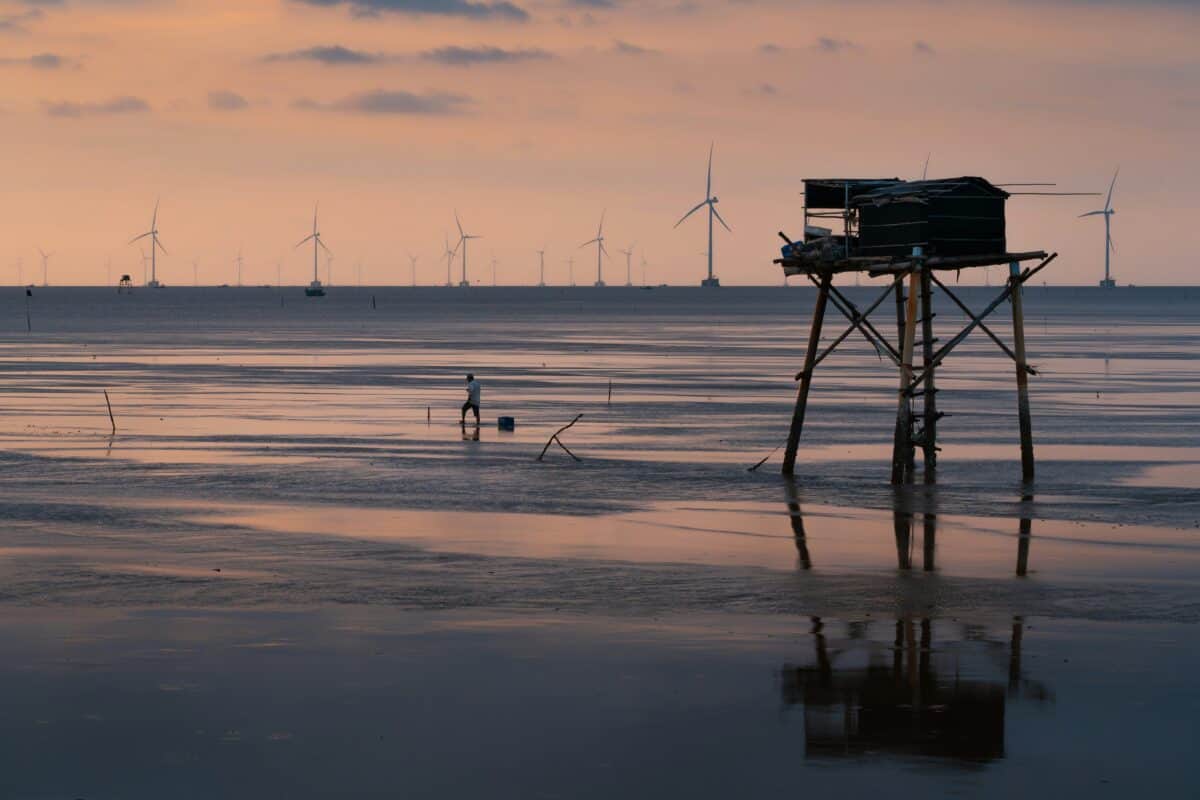
A: The first phase of the proposed Viet Nam-Malaysia-Singapore offshore-wind project has been described as a 2 GW development targeted for completion around 2034, not as an immediate source of large-scale regional supply. Viet Nam’s revised planning has also set an ambition of up to 17 GW of offshore wind by 2035. These are significant milestones, but they should be viewed as part of a phased transition rather than an immediate source of large-scale regional electricity exports.

Scaling up will depend not only on generation capacity, but also on overcoming several enabling constraints, including grid reinforcement, transmission infrastructure, permitting processes, bankable financing arrangements, supply chain capacity and long-term commercial offtake agreements. In other words, the pace of deployment will be determined as much by the development of transmission infrastructure as by the construction of wind farms themselves.
In this regard, the subsea cable framework currently being developed under the Enhanced ASEAN Power Grid Memorandum of Understanding will be a crucial enabler. As ASEAN increasingly looks towards cross-border renewable energy trade, many future interconnections including the proposed Viet Nam-Malaysia-Singapore corridor, as well as potential links involving Indonesia, Malaysia, Singapore and the Philippines, will rely on subsea transmission infrastructure. Developing a common regional framework for subsea cables, covering technical standards, planning principles, permitting, environmental and marine considerations, ownership arrangements, operation and maintenance, and cross-border regulatory coordination, will help reduce uncertainty and facilitate investment in these strategically important projects.
Ultimately, VTMS should not be viewed as a single infrastructure project but as an evolving regional corridor. Generation capacity, domestic grid expansion, subsea transmission and regulatory cooperation will all need to advance in parallel. The success of VTMS will therefore depend not only on Viet Nam’s ability to scale renewable energy, but also on ASEAN’s ability to develop the enabling regional infrastructure and governance frameworks that allow clean electricity to move efficiently and reliably across borders.
Q: In the context of ongoing conflicts such as the Russia-Ukraine war and the Iran war, which have disrupted global energy markets and supply chains, how can the ASEAN Power Grid and initiatives like VTMS strengthen Southeast Asia’s energy security?
A: The Russia-Ukraine war and the current conflict involving Iran demonstrate that APG is not just a climate-change initiative but a strategic energy-security asset. Import-dependent economies remain exposed to disrupted shipping routes, volatile oil and LNG prices, rising insurance costs and competition for replacement supplies.
The ASEAN Power Grid can reduce this vulnerability in four ways.
First, diversification. Countries gain access to a wider portfolio of hydropower, solar, wind, geothermal and other resources rather than relying primarily on imported fossil fuels.
Second, resource sharing. Differences in demand patterns and renewable availability allow surplus electricity in one system to support another.
Third, emergency support. Interconnections can provide an additional option during plant outages, fuel disruptions and extreme weather, although sufficient domestic reserves and contingency planning will still be necessary.
Fourth, price resilience. Greater access to regionally generated renewable electricity can reduce the extent to which global oil and gas shocks pass through to domestic electricity costs.
The grid is not a complete substitute for national energy-security policies. It can also transmit disruptions if countries become excessively dependent on one supplier or corridor. ASEAN therefore needs diverse routes, transparent emergency protocols, minimum reliability standards and arrangements preventing unilateral export restrictions during periods of stress.
Q: Do you see the VTMS pilot as moving ASEAN toward a more EU-style coordinated electricity market model, or is it more likely to remain a looser network of bilateral and plurilateral agreements?
A: In the foreseeable future, ASEAN is more likely to develop a network of bilateral and plurilateral arrangements than a fully integrated EU-style market.
The European model rests on institutions and rules that ASEAN does not presently replicate, including extensive market coupling, common network codes, independent regulatory cooperation and supranational legal mechanisms. ASEAN’s electricity systems also differ widely in ownership, pricing, subsidies, market maturity and national energy-security priorities.
The more plausible ASEAN pathway is gradual and project-based: bilateral interconnections, wheeling arrangements through third countries, plurilateral trading pilots, common technical and commercial principles, and progressively more standardized regional procedures.
Q: If the VTMS pilot is successful, which other ASEAN sub-regional trading arrangements do you believe are most likely to follow, and what lessons from VTMS would be most important for scaling up the broader ASEAN Power Grid?
A: The strongest candidates are those that combine existing infrastructure, clear demand, available renewable resources and sustained political commitment.
BIMP Power Integration Project
The Brunei Darussalam-Indonesia-Malaysia-Philippines arrangement is already recognized by ASEAN as an important pathway under the ASEAN Power Grid. It could connect hydropower and other renewable resources in Borneo with demand centres across the subregion.
Expanded LTMS trading
The existing Lao PDR-Thailand-Malaysia-Singapore project remains the most immediate foundation for increasing volumes, adding additional suppliers and moving toward multidirectional rather than one-way trade. Its planned trading capacity was increased from 100 MW to 200 MW.
Indonesia-Singapore and Indonesia-Malaysia links
Cross-border clean-electricity projects involving Indonesia and Singapore continue to advance, including a new agreement announced in July 2026. The most important lessons from VTMS would be to begin with a politically supported and commercially bounded pilot, assign responsibilities clearly among utilities, regulators, and system operators, agree on wheeling and settlement arrangements before construction, ensure benefits are visible to every transit and participating country, establish transparent renewable-energy accounting, plan transmission and generation together, and design the pilot for replication rather than as a one-off exception.
Given the geographic fragmentation of countries like Indonesia and the Philippines, and Thailand, to what extent can subsea interconnections realistically become the backbone of ASEAN’s Power Grid, and what technical, financial, and jurisdictional challenges will need to be overcome to implement large-scale underwater grid integration across multi-island systems?
The ASEAN Power Grid will probably be a hybrid system of terrestrial interconnections, subsea links and strengthened domestic transmission networks. Subsea cables will be indispensable, particularly for connecting Indonesia, the Philippines, Borneo and Singapore. Also, Thailand has potential routes across the Gulf of Thailand.
However, the development of such infrastructure faces several major challenges. Technically, projects must address long cable distances, deep water, difficult seabed conditions, converter-station requirements, cable losses, repair times, typhoon and seismic exposure, and the need to maintain stability between national systems operating under different technical frameworks. Financially, they will require significant upfront investment, with uncertainties around utilization rates, lengthy payback periods, and complex cost-allocation issues among generators, transit countries, and importing systems.
Jurisdictional challenges include marine spatial planning, exclusive economic zones, environmental approvals, fishing and shipping routes, cable ownership, taxation, liability, and cross-border dispute resolution. At a systemic level, subsea cables alone cannot resolve weaknesses in national grids; electricity delivered to coastal connection points must still be absorbed and transported through sufficiently strong domestic transmission networks. The ADB and World Bank financing initiative for the ASEAN Power Grid is therefore significant because the scale, complexity, and risk profile of this infrastructure will require coordinated public and private financing.