
This story was originally published by Grist through Covering Climate Now Shared Library. Sign up for Grist’s weekly newsletter here.
Cheap, abundant Chinese solar panels have become essential to decarbonizing the global energy system. Without them, the world’s clean energy transition would have arguably been slower and more expensive. But China’s solar manufacturing industry now faces a bizarre problem: oversupply. Chinese solar manufacturers have built far more production capacity than the market can absorb. In fact, China now has enough factories to meet roughly twice the global demand for solar products, according to an analysis by the research firm Rhodium Group. If all newly announced factories get built, the country’s manufacturing capacity could double, further widening the gap between supply and demand.
The market imbalance has put Chinese solar panel makers in a precarious position. Market analysts and company executives say the industry’s central problem — a massive oversupply of panels — has triggered vicious “price wars” between competing companies and sent prices plummeting. In the first quarter of 2026, the country’s solar manufacturers announced $1.5 billion in losses, an extension of roughly three years of continuous unprofitability. Industry behemoths like JinkoSolar and Longi have also been facing slowing installations in China, U.S. trade barriers, and weaker global demand.
“There’s been an enormous amount of price wars internally in China, with companies just slashing prices to very, very low levels,” said Hannah Pitt, director of the energy and climate practice at Rhodium Group.
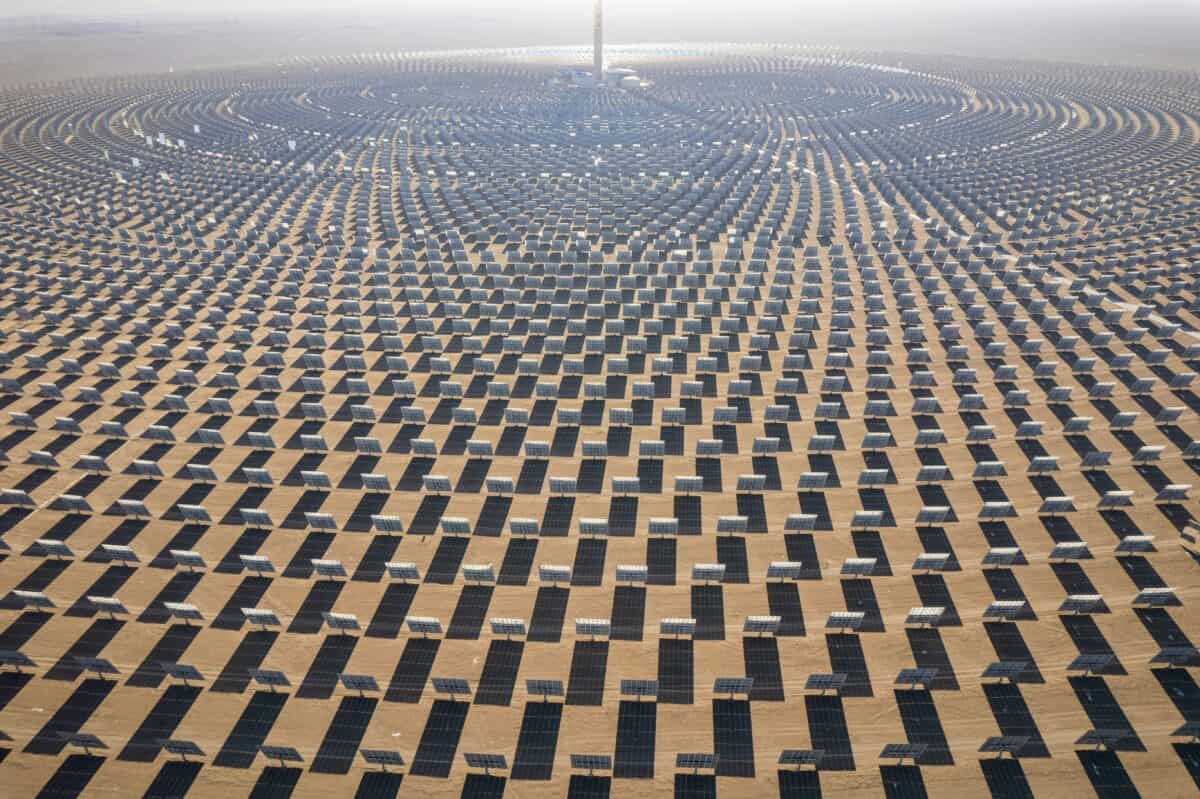
Chinese officials have spent years trying to curb the cutthroat competition, stem overproduction, and stabilize prices, with little success. For all but the most advanced solar products, prices kept falling, and companies kept building new facilities. Regional governments, which have invested heavily in solar supply chains, have been hesitant to trim local development. Some manufacturers even built illegal factories or produced panels without permits, according to reporting by the South China Morning Post.
“Everyone is wondering how long this can last,” said Martin Schachinger, a solar product wholesaler based in Germany. “Even TaleSun, a manufacturer we expected to go out of the market five years ago, still exists. So, it’s a little bit … spooky.”
China designated solar a strategic industry in 2010, prompting massive public investment. Local governments subsidized manufacturers, while private investors expanded every stage of the supply chain in anticipation of booming global demand. The resulting manufacturing ecosystem allowed Chinese firms to produce extraordinarily cheap solar panels for both domestic and international markets.

But production soon outpaced global demand, triggering a fierce battle as manufacturers slashed prices to win customers. The Chinese government dubbed this self-defeating competition neijuan, meaning “involution,” a term originally coined by Chinese students describing the relentless pressure to succeed with diminishing returns. Involution is a common trend in Chinese industries that receive heavy public support, including other clean energy sectors such as batteries and electric vehicles.
For the United States and the rest of the globe, the oversupply has meant consistent availability of cheap solar panels and components that boosted the adoption of renewable energy. Solar panels provided more electricity in the United States than coal for the first time on record in May, according to analysis of government data by Ember, an energy think tank. Globally, clean power sources, of which solar is the fastest growing, met all new electricity demand around the world in 2025, staving off an increase in fossil fuel generation. It’s helped China, the world’s largest net emitter of greenhouse gases, flatten its emissions growth, too. The country’s emissions appear to have plateaued and could soon peak.
If Chinese officials correct the oversupply problem, it could cool some of that rapid solar deployment. But experts say China is more focused on advancing its solar industry than rightsizing it, meaning the cheap solar panel prices may continue for years.
Chinese officials have called for “concerted efforts” to rein in solar production as recently as April. But the country’s broader industrial policies and stated goals seem to be leaning away from strict discipline, focusing instead on upgrading solar supply chains to produce more advanced technologies, according to a May report by Rhodium Group. In other words, the oversupply problem isn’t scaring China away from its big bets on solar. In fact, its latest five-year plan signals that China will continue supporting its massive clean energy industries, including solar, “optimizing and upgrading“ those industries rather than clamping down on their oversupply.
“It’s a really interesting moment right now across Chinese industries. Instead of just trying to consolidate, Beijing is pushing industries to go further, to move into more advanced manufacturing,” said Pitt.
The strategy stands in stark contrast to the United States’ steady solar manufacturing growth, which relies on market conditions rather than government support. Over the past year, the Trump administration and Congress have weakened policy incentives for solar, cutting back tax credits expanded in the 2022 Inflation Reduction Act and impeding solar development on federal land.
But demand for cheap solar has kept the industry growing. Unlike China’s self-sufficient solar empire, U.S. producers can’t meet all domestic demand for solar panels and are still heavily reliant on foreign components, primarily from China. While the U.S. pursues a slower, market-led approach, China has chosen a long-term state strategy that prioritizes manufacturing dominance over near-term profits.
That manufacturing dominance is especially important now that other countries are pushing back against China’s near-monopoly in the industry. The country’s efforts to upgrade its supply chains and move into higher-value products could help it stay ahead as new technologies reshape the solar market and countries attempt to build their own competing industries.
“If a solar company in Europe doesn’t make a joint venture with Chinese companies and use the huge advantages of the Chinese systems, then it won’t be successful,” said Schachinger. “From time to time, Indian manufacturers try to step into the European market, but against Chinese products, they have no advantages, and the prices are higher.”
That means if unsustainable business models or geopolitical tensions don’t spoil the boom, the world will have at least a few more years of low-cost Chinese solar products to supply its decarbonization goals, experts suspect.
“This isn’t over yet,” Pitt said. “I think the data points to prices remaining low for the foreseeable future.”