

The Energy Pioneer
No Result
View All Result
  • Home
  • Clean Tech
    • Electric Vehicles
    • Energy Efficiency
    • Green Hydrogen
    • Smart Grid
    • Battery Storage
  • Green Finance
    • Public Financing
    • Private Financing
    • Carbon Markets
  • Policy
  • Renewable Energy
    • Wind
    • Solar
    • Hydropower
    • Nuclear
    • Hydrogen
    • Fossil Fuels
    • Geothermal
  • Regions
    • Africa
    • Asia
    • Europe
    • North America
    • Latin America
    • West Asia
    • Oceania
  • Features
  • Who We Are
    • About Us
    • EP Network
    • Contact Us
No Result
View All Result
The Energy Pioneer
No Result
View All Result
  • Home
  • Clean Tech
  • Green Finance
  • Policy
  • Renewable Energy
  • Regions
  • Features
  • Who We Are
Home Features

Building a Sustainable Blue Economy: Shipping, Fishing and Ocean Protection

Q&A with Pedro Bobião, Managing Director of Vide de Grunwald

Otto GundersonbyPedro BobiãoandOtto Gunderson
October 21, 2026
Reading Time: 4 mins read

In this Q&A, Pedro Bobião, Managing Director of Vide de Grunwald, explores how sustainable ocean-based industries can reduce emissions, protect marine ecosystems and drive the transition to a resilient blue economy through responsible investment, innovation and effective environmental governance.

RELATED POSTS

Why a Health Clinic Outperforms Industrial Carbon Capture

Producing vs Preserving

The Battery Industry Prepares for the Next Phase of Energy Storage Growth

Q: How can a more sustainable approach to ocean and sea-based economies lead to reductions in emissions?

A: By improving how the whole chain works. More fuel-efficient ships and fishing boats help reduce emissions, but so do better logistics, cleaner energy and reducing product losses along the supply chain.

Protecting mangroves, seagrass and other coastal habitats also preserves carbon stocks. That responsibility should not depend on a financial return. 
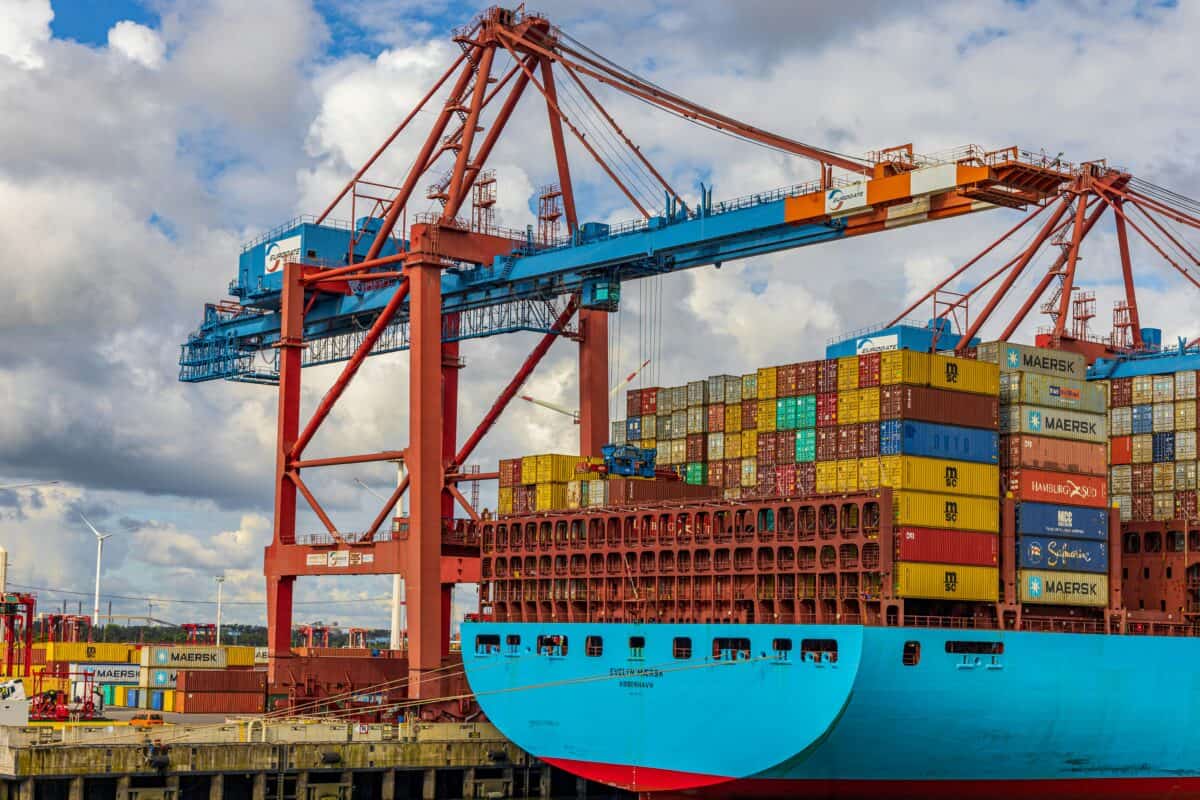
Container ship in the port of Hamburg (Germany)-Photo by Dominik Lückmann on Unsplash

Shipping produces around 3 percent of global greenhouse gas emissions, making vessel efficiency, fuels with lower lifecycle emissions and port electrification important areas for action. 

Take seafood. If part of the harvest never reaches the market, the energy used to produce, process and transport it has been wasted. Using processing by-products can improve resource efficiency, provided there is a buyer and a genuine environmental benefit. 

This is one reason I develop clusters. They make it possible to identify where resources are being lost along the supply chain and bring together the businesses and investments needed to address those gaps. A technology company needs an industrial partner. A processor needs reliable supply and customers. Shared infrastructure needs enough users to sustain it. 

Buy JNews
ADVERTISEMENT

We still need to measure results. Lower emissions per tonne are useful, but total emissions matter too. Calling an activity “blue” tells us very little about either.

Q: What tools are available for governments seeking to ensure ocean preservation and environmental health? Are there policies that have been successful in pioneering countries that can be adopted more broadly? 
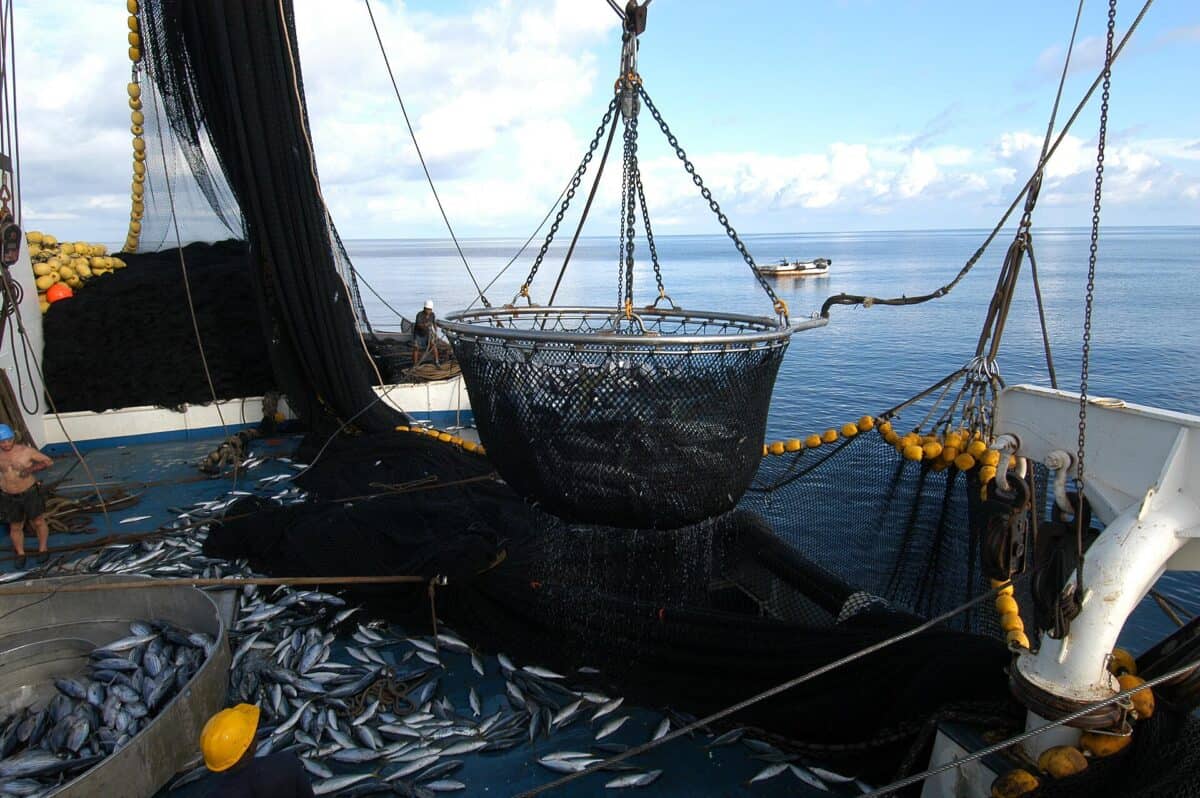
A large landing net, known as a salabarde, used to lift fish aboard a commercial fishing vessel after a purse-seine haul off the Seychelles-Photo by Marc Taquet / Ifremer, Wikimedia Commons, licensed under CC BY 4.0.

A: Governments have tools: marine spatial planning, protected areas, fisheries controls, pollution standards and environmental assessment. The difficult part is giving institutions the resources and continuity to make them work. 

International rules are also advancing. The High Seas Treaty entered into force in January 2026, and the WTO Agreement on Fisheries Subsidies in September 2025. Both add legal instruments; implementation will decide their value. 

Seychelles has zoned its ocean territory and designated 30 percent for marine protection, supported in part by a debt-for-nature conversion. In the United States, NOAA’s 2024 report records 51 fish stocks rebuilt since 2000 under a system of scientific assessment, catch limits and corrective action. Both approaches require continued management. A designation or a recovery milestone does not finish the job. 

I would also look closely at how public money is spent. Before financing a facility, establish who will use it, who will operate it and who will pay for maintenance. Otherwise, we risk building infrastructure without the conditions to keep it working. 

Clusters can connect public investment to the needs of companies and research institutions. They can organise shared services, training and projects that help businesses meet environmental requirements. 

That needs professional management and responsibility for delivery. Regulators must retain independent oversight. Supporting an industry also means ensuring that it can operate within environmental limits.

Q: How can offshore wind replace oil and natural gas extraction in deep sea areas? Can existing oil and natural gas infrastructure be adapted for new uses such as offshore carbon storage? 

A: Offshore wind can replace some fossil-fuel use through electricity generation and electrification. How far that goes depends on grids, demand and the wider energy system. Putting turbines offshore does not automatically replace oil and gas extraction. 

Floating wind makes deeper-water projects possible, provided the wind resource, grid connection and economics are suitable. 

For established offshore regions, an important opportunity is the industrial capability already there: engineering companies, marine services, ports and experienced workers. 

A cluster can help those businesses understand what new developers need and prepare to supply it. Training matters, but companies also need contracts. That is what sustains jobs. 

Some physical assets can also find new uses. Porthos in the Netherlands has converted former gas production wells for CO₂ injection into depleted fields. Northern Lights in Norway is already storing CO₂ in a saline aquifer. 

Reuse must be assessed asset by asset. Existing infrastructure can have value, but its integrity, environmental suitability and long-term liabilities need to be established. The full capture, transport and storage chain must also demonstrate a net emissions benefit. 

The practical task is to identify which suppliers can compete in new markets, which assets justify adaptation and which should be safely decommissioned.

Q: What are the biggest existing threats to the health of oceans and seas, and what tools are currently in place for mitigation and protection? 
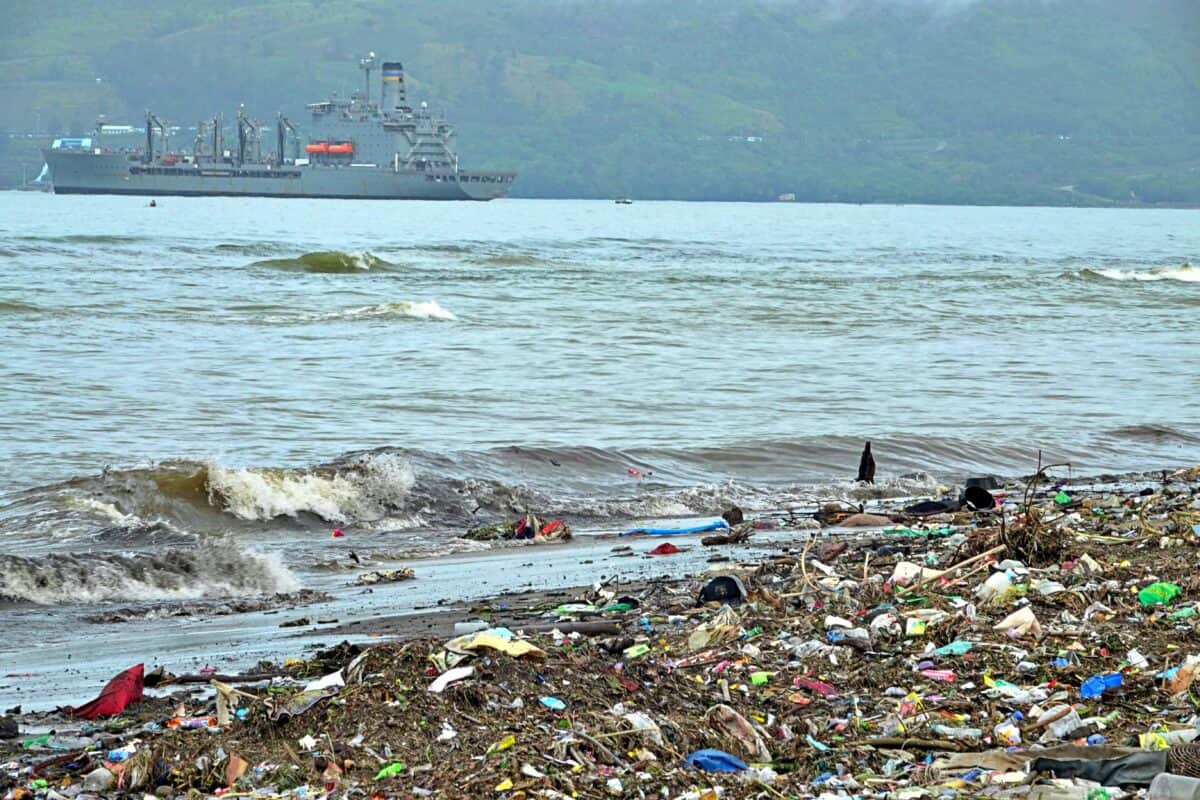
Garbage on the shoreline-Photo by James Lo on Unsplash

A: Climate change, overexploitation, pollution and habitat destruction are the main threats. They reinforce one another, so protecting a site while pressures around it continue will only achieve so much. 

Much of the work also starts inland. Wastewater, agricultural runoff and poorly managed waste reach the sea through rivers and coastal systems. Ocean protection therefore involves decisions across the wider economy. 

We have tools, including fishing regulation, protected areas, wastewater treatment, monitoring and restoration. Internationally, MARPOL limits pollution from ships and the London Protocol restricts dumping at sea. All of these need people, operating budgets and institutions able to respond. A sensor is useful only if somebody acts on what it detects. 

Clusters can help where businesses share a resource and face pressures they cannot address individually. In aquaculture, coordinated monitoring and research can support better decisions and investment. Companies benefit from cooperation, while authorities remain responsible for environmental limits and enforcement. 

For investors, this belongs in due diligence. Water quality and ecosystem deterioration affect production, costs and business continuity. A financial model that ignores those dependencies gives an incomplete picture of the investment.

Tags: agricultural runoffBlue BondsBlue Economycatch limitsfish stocksfishingQ&AVessel fuel efficiencywater quality
ShareTweetShare
Pedro Bobião

Pedro Bobião

Pedro Bobião is Managing Director of Vide de Grunwald, where he develops blue economy clusters connecting businesses, research institutions, investors and public authorities. His work focuses on turning innovation and regional capabilities into competitive industries, viable businesses and jobs. His international career spans CEO and executive roles across technology, telecommunications, media and aquaculture, combining operational leadership with experience in investment, business growth and restructuring. He brings this cross-sector perspective to building value chains and helping innovation reach commercial scale.

Otto Gunderson

Otto Gunderson

Otto Gunderson has been working in clean energy for the last 7 years, with the last two being spent split between South America, Africa, and Southeast Asia, reporting on the transition to clean energy. After traveling and writing for two years, he founded The Energy Pioneer to create a news outlet with a global approach to clean energy journalism. He particularly enjoys writing about entrepreneurship, investment, and innovations that are contributing to greenhouse gas reduction and clean energy development.

Related Posts

Why a Health Clinic Outperforms Industrial Carbon Capture
Features

Why a Health Clinic Outperforms Industrial Carbon Capture

October 15, 2026
Producing vs Preserving
Africa

Producing vs Preserving

October 8, 2026
The Battery Industry Prepares for the Next Phase of Energy Storage Growth
Battery Storage

The Battery Industry Prepares for the Next Phase of Energy Storage Growth

September 29, 2026
Integrated Resource Planning Offers a Strategy to Accelerate Clean Energy
Energy Efficiency

Integrated Resource Planning Offers a Strategy to Accelerate Clean Energy

September 25, 2026
Rule 9-6 and the Bay Area’s Shift to Cleaner Water Heating
Features

Rule 9-6 and the Bay Area’s Shift to Cleaner Water Heating

September 24, 2026
AI Can Scale Regenerative Agriculture – If Farmers Trust It
Features

AI Can Scale Regenerative Agriculture – If Farmers Trust It

September 22, 2026

Popular Stories

  • AI Can Scale Regenerative Agriculture – If Farmers Trust It

    AI Can Scale Regenerative Agriculture – If Farmers Trust It

    0 shares
    Share 0 Tweet 0
  • The Race to Host AI: Data Centres in Water-Scarce India

    0 shares
    Share 0 Tweet 0
  • The Philippines’ Nuclear Gamble

    0 shares
    Share 0 Tweet 0
  • The Sargassum Paradox: Why the Caribbean’s Clean Energy Hope is a Supply Chain Trap

    0 shares
    Share 0 Tweet 0
  • Vietnam’s Oil Buffer Faces Pressure as the Iran War Disrupts Global Oil Flows

    0 shares
    Share 0 Tweet 0

Actionable Info

From The Energy Pioneer

Where the energy transition connects.

Journalists, investors, companies, and clean energy leaders — all in one network.

Explore EP Network →

The Energy Pioneer

The Energy Pioneer covers the global energy transition — from clean tech and green finance to policy and renewable energy.

Recent Posts

  • Building a Sustainable Blue Economy: Shipping, Fishing and Ocean Protection
  • ClimateTech Series: Building the Carbon Market
  • Why the Oil Crisis is the Biggest Gift to Climate Activists in Years

Quick Links

  • Home
  • Clean Tech
  • Renewable Energy
  • Green Finance
  • Policy
  • Regions
  • Features
  • Who We Are

© 2026 The Energy Pioneer | All Rights Reserved. |

From The Energy Pioneer

Meet EP Network.

Enter your email and our team will reach out — or sign up directly.

Please enable JavaScript in your browser to complete this form.
Loading
or sign up directly →
From The Energy Pioneer

You read about the energy transition. EP Network connects you to it.

Leave your email and our team will reach out.

Please enable JavaScript in your browser to complete this form.
Loading
or
Sign up now →
No Result
View All Result
  • Home
  • Clean Tech
    • Electric Vehicles
    • Energy Efficiency
    • Green Hydrogen
    • Smart Grid
    • Battery Storage
  • Green Finance
    • Public Financing
    • Private Financing
    • Carbon Markets
  • Policy
  • Renewable Energy
    • Wind
    • Solar
    • Hydropower
    • Nuclear
    • Hydrogen
    • Fossil Fuels
    • Geothermal
  • Regions
    • Africa
    • Asia
    • Europe
    • North America
    • Latin America
    • West Asia
    • Oceania
  • Features
  • Who We Are
    • About Us
    • EP Network
    • Contact Us

© 2026 The Energy Pioneer | All Rights Reserved. |