The Energy Pioneer
No Result
View All Result
  • Home
  • Clean Tech
    • Electric Vehicles
    • Energy Efficiency
    • Green Hydrogen
    • Smart Grid
    • Battery Storage
  • Green Finance
    • Public Financing
    • Private Financing
    • Carbon Markets
  • Policy
  • Renewable Energy
    • Wind
    • Solar
    • Hydropower
    • Nuclear
    • Hydrogen
    • Fossil Fuels
    • Geothermal
  • Regions
    • Africa
    • Asia
    • Europe
    • North America
    • Latin America
    • West Asia
    • Oceania
  • Features
  • Who We Are
    • About Us
    • EP Network
    • Contact Us
No Result
View All Result
The Energy Pioneer
No Result
View All Result
  • Home
  • Clean Tech
  • Green Finance
  • Policy
  • Renewable Energy
  • Regions
  • Features
  • Who We Are
Home Renewable Energy Fossil Fuels

Fossil-Fuel Strongmen at Trump-less G20 Summit

byDeogracias Kalima
April 1, 2026
Reading Time: 6 mins read

The Group of 20 (G20) gathering of the world’s most powerful economies (excluding the US) kicked off in Johannesburg at the end of November. The host, President Cyril Ramaphosa, is a billionaire with deep coal roots. He is trumpeting one of the summit’s main themes as breaking the world, especially the Global South, from the curse of ‘extractive colonialism’ and unleashing a wave of ‘green jobs’.

RELATED POSTS

China Hasn’t Kept Its Coal Phaseout Promises Abroad

Why Google is Paying to Upgrade Nuclear Power Plants

De-Risking Geothermal Exploration in the Philippines

“We now know that unless we change course, urgently and resolutely, the conditions of life on this planet will become intolerable. The move to a low-carbon economy cannot be delayed. Indeed, it must be accelerated,”  he told a global gathering of the Business20 leaders in Johannesburg.

However, green transition advocates say that this represents showmanship.

To understand this response, just scratch the surface of the summit’s sentiments – South Africa, the host, remains locked in the mineral-energy complex built on burning fossil fuels to pump more coal for booming export markets.

“Never mind the public health carnage,” says Mousioua Lekota, a centre-left lawmaker and former minister of defense in South Africa.

As the Energy Pioneer has previously reported, South Africa is the 13th most carbon-polluting economy on the planet. Raeesa Moolla, an air quality expert at the country’s premier Wits University, revealed that inhaling toxic air has resulted in 5,000 direct deaths, mainly from cardiovascular problems.

“We mustn’t fool ourselves on the pro-green rhetoric of the G20 summit. The host is the number one accused of emitting CO2 at scale,” he says.

Buy JNews
ADVERTISEMENT

The Trump administration’s absence at the summit will hog the limelight. Some observers initially thought the no-show of the world’s most pro-oil president could be a blessing in disguise, giving the summit space to deliberate on the waning global commitment to the Paris Agreement’s pledge to keep temperature increases under 2 degrees.

While too much focus has been given to the pro-oil US administration’s absence from the G20, the overlooked spectacle is that the so-called Global South leaders who will dominate the summit are equally strong fossil fuel proponents.

“When I heard Trump is not coming, I thought well, drill-baby-drill won’t be missed,” says Lekota. “That’s until I noticed the list of who is coming instead”. 

In the absence of a climate-denial US administration, the star guests at the summit, fiercely pro-oil regimes from Russia, Saudi Arabia, India, and Turkey, are sending high-powered delegations to the summit, with Turkey’s Recep Tayyip Erdogan and India’s Narendra Modi, key stars of the show.

“Modi, Erdogan, Russia, and Saudis will be the crème de la crème of gas and oil regimes at the G20 summit,” says Mathews Phosa, a former treasurer-general in South Africa’s ruling party.

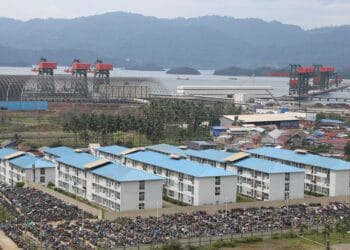
The Russians and Turks, specifically, have been fiercely lobbying, outbidding each other to get the rights to sell gas-fired electricity to the host country as South Africa appears to face a ‘severe’ future gas shortage between 2026 and 2028, says veteran climate campaigner Tapuwa Nhachi. Sensing opportunity, the Turkish have moored Kapowerships, which are large Turkish ships floating in South African ports of Coega, Richards Bay, and Saldanha, to generate electricity via gas-fired power plants.

The total capacity would have been 1,220 megawatts of electricity brought onshore. Climate monitoring groups like the South Africa Centre for Environmental Rights have fiercely fought the plans, warning that ‘the three powerships will emit an enormous amount of over 46 million tC02e GHG over the projects’ 20-year lifespan, taking up over 1.18% of SA’s national carbon budget’. By late 2024, South African courts permanently blocked the planned mooring of gas-to-electricity ships.

“Behind the veil of a pro-climate G20, the likes of Turkey, Russia, Gulf Arab monarchies will no doubt take advantage of the US’s absence to lobby hard for a stake in South Africa’s growing gas and oil needs,” adds Nhachi. Though the ‘pro-climate’ European Union will send strongmen like Emmanuel Macron of France to the summit, it matters little, as the EU lacks the leverage of the US at global forums.

Ahead of the summit, the International Energy Agency bluntly warned this week that Oil and Gas demand is set to rise in the next 25 years without a global change of course.

“The G20 will veer towards the corner of ‘emphasizing the legitimate energy needs of Global South countries,” says Nhachi.

“This coded language simply means that the Global South has a right to exploit oil, coal, and gas and burn fossil fuels at scale just like the West did during the Industrialization phase.” he adds.

It’s fertile rhetoric among the majority of delegates. This is why the absence of the US should not fool anyone that a more pro-climate communique to strengthen the just-ended COP30 will emerge from the G20 in South Africa, he concluded. 
ShareTweetShare
Deogracias Kalima

Deogracias Kalima

Related Posts

China Hasn’t Kept Its Coal Phaseout Promises Abroad
Fossil Fuels

China Hasn’t Kept Its Coal Phaseout Promises Abroad

November 2, 2026
Why Google is Paying to Upgrade Nuclear Power Plants
Nuclear

Why Google is Paying to Upgrade Nuclear Power Plants

October 30, 2026
De-Risking Geothermal Exploration in the Philippines
Geothermal

De-Risking Geothermal Exploration in the Philippines

October 29, 2026
Can Pax Silica Deliver for the Philippines’ Tech Ambitions?
Policy

Can Pax Silica Deliver for the Philippines’ Tech Ambitions?

October 22, 2026
Why the Oil Crisis is the Biggest Gift to Climate Activists in Years
Fossil Fuels

Why the Oil Crisis is the Biggest Gift to Climate Activists in Years

October 19, 2026
Why a Health Clinic Outperforms Industrial Carbon Capture
Features

Why a Health Clinic Outperforms Industrial Carbon Capture

October 15, 2026
Next Post
A Crash Course in Climate Finance #1

A Crash Course in Climate Finance #1

Hit by Unequal Extreme Heat in Cities– Black South Africans Retreat to Cooler Rural Homes

Hit by Unequal Extreme Heat in Cities– Black South Africans Retreat to Cooler Rural Homes

Popular Stories

  • AI Can Scale Regenerative Agriculture – If Farmers Trust It

    AI Can Scale Regenerative Agriculture – If Farmers Trust It

    0 shares
    Share 0 Tweet 0
  • The Race to Host AI: Data Centres in Water-Scarce India

    0 shares
    Share 0 Tweet 0
  • The Sargassum Paradox: Why the Caribbean’s Clean Energy Hope is a Supply Chain Trap

    0 shares
    Share 0 Tweet 0
  • The Philippines’ Nuclear Gamble

    0 shares
    Share 0 Tweet 0
  • Vietnam’s Oil Buffer Faces Pressure as the Iran War Disrupts Global Oil Flows

    0 shares
    Share 0 Tweet 0

Actionable Info

From The Energy Pioneer

Where the energy transition connects.

Journalists, investors, companies, and clean energy leaders — all in one network.

Explore EP Network →

The Energy Pioneer

The Energy Pioneer covers the global energy transition — from clean tech and green finance to policy and renewable energy.

Recent Posts

  • China Hasn’t Kept Its Coal Phaseout Promises Abroad
  • Why Google is Paying to Upgrade Nuclear Power Plants
  • De-Risking Geothermal Exploration in the Philippines

Quick Links

  • Home
  • Clean Tech
  • Renewable Energy
  • Green Finance
  • Policy
  • Regions
  • Features
  • Who We Are

© 2026 The Energy Pioneer | All Rights Reserved. |

From The Energy Pioneer

Meet EP Network.

Enter your email and our team will reach out — or sign up directly.

Please enable JavaScript in your browser to complete this form.
Loading
or sign up directly →
From The Energy Pioneer

You read about the energy transition. EP Network connects you to it.

Leave your email and our team will reach out.

Please enable JavaScript in your browser to complete this form.
Loading
or
Sign up now →
No Result
View All Result
  • Home
  • Clean Tech
    • Electric Vehicles
    • Energy Efficiency
    • Green Hydrogen
    • Smart Grid
    • Battery Storage
  • Green Finance
    • Public Financing
    • Private Financing
    • Carbon Markets
  • Policy
  • Renewable Energy
    • Wind
    • Solar
    • Hydropower
    • Nuclear
    • Hydrogen
    • Fossil Fuels
    • Geothermal
  • Regions
    • Africa
    • Asia
    • Europe
    • North America
    • Latin America
    • West Asia
    • Oceania
  • Features
  • Who We Are
    • About Us
    • EP Network
    • Contact Us

© 2026 The Energy Pioneer | All Rights Reserved. |