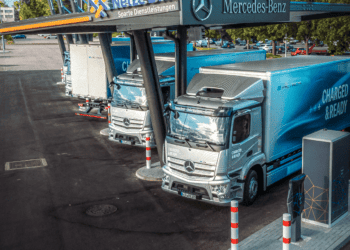

In Ethiopia’s capital, Addis Ababa, a quiet revolution is taking shape as electric vehicles are slowly taking over the busy city roads.
But in a country where car ownership has been restricted by high fuel costs and limited transport infrastructure, Ethiopia is attempting something few African nations have dared: Leapfrogging the fossil-fuel age altogether. Much like some African countries skipped landline telephones and moved straight to mobile technology, Ethiopia is betting it can bypass the era of petrol and diesel vehicles and transition directly into electric mobility. Backed by aggressive government policies which include a ban on imported combustion engine cars, sweeping tax exemptions for EVs and investment in charging infrastructure, Ethiopia’s electric vehicle fleet has surged from almost zero to more than 140,000 vehicles in just a few years.

Beyond climate ambition, the transformation is being driven by economic necessity. Ethiopia spends billions of dollars importing fuel, placing immense pressure on scarce foreign currency reserves. Electric vehicles, powered largely by the country’s vast hydropower resources, offer a chance to reduce that dependence while building an entirely new manufacturing sector. More than 17 EV assembly plants are already operating, with authorities targeting to expand that number to 60 by 2030.
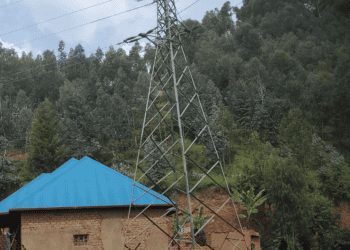
However, the road ahead remains bumpy. Outside Addis Ababa, charging stations are still rare, and more than half of Ethiopian households still lack access to electricity reflecting Ethiopia’s wider urban-rural electricity divide. Critics question whether an electric transport revolution can succeed in a country where many citizens still struggle to access reliable power at home. But supporters argue that Ethiopia’s relative lack of entrenched fossil-fuel infrastructure could become its greatest advantage, allowing the country to build a transport system for the future rather than retrofit one from the past.
Dr Theodros Talema, an independent researcher and expert on the EV sector in Ethiopia tells The Energy Pioneer that Ethiopia represents one of the most compelling emerging EV markets in Africa, as it has a rare opportunity to transition toward electric mobility before becoming heavily locked into fossil-fuel based transport systems.
“Several key factors are driving the growth of EV adoption in Ethiopia. One of the most significant is the country’s strong renewable energy base, particularly hydropower, which provides relatively low-cost and domestically generated electricity compared to imported petroleum fuels. At the same time, Ethiopia spends substantial foreign currency reserves on fuel imports, making electric mobility an increasingly important strategy for both economic stability and energy security,” Dr Talema says.
Dr Talema adds that government policy in Ethiopia has also played a crucial role in accelerating this transition.

“Recent restrictions on the import of internal combustion engine vehicles, alongside incentives and supportive frameworks for electric vehicles, have increased both public and private sector interest in EV adoption. Additionally, rising fuel prices and growing urban mobility demand, especially in Addis Ababa, are further strengthening the shift toward electric transport solutions,” he says.
According to Dr Talema, another important enabling factor is Ethiopia’s relatively early-stage automotive market.
“Because the transport system is still developing, the country has a unique opportunity to design and build EV infrastructure, such as charging networks, maintenance systems, and assembly facilities, alongside urban growth. This creates a leapfrogging opportunity similar to the rapid transition from landlines to mobile telecommunications in many developing economies,” he says.
Looking ahead, Dr Talema adds, Ethiopia’s EV sector shows strong potential, particularly in electric buses, minibuses, ride-hailing services, motorcycles, and small urban vehicles.
“There is also significant opportunity for local EV assembly, battery-related industries, renewable energy integration, and broader green industrialization,” he says.
However, Dr Talema explains that several challenges must be addressed.
“Charging infrastructure remains limited, EV financing is still inaccessible for many consumers, and technical expertise in EV maintenance and battery systems is in early stages of development. In addition, electricity distribution constraints and the need for a more mature regulatory framework could slow adoption if not strategically managed,” he adds.
Overall, Ethiopia has the potential to emerge as a regional leader in electric mobility if investments in infrastructure, policy consistency, technical capacity building, and renewable energy expansion continue to advance in a coordinated manner.
In a recent analysis published by Energy for Growth Hub, a policy and research initiative, Rose Mutiso and Hamna Tariq revealed that nearly 5 percent of cars in Ethiopia are electric, matching global and European averages and surpassing the United States and India which stand at 2.7 percent 0.5 percent respectively.
“Within Africa, Ethiopia is a clear outlier,” they wrote in the study, noting that the country’s roughly 15,000 EV passenger cars exceed the stock in South Africa, the continent’s largest auto market, by more than fourfold.
The analysts describe this as a remarkable achievement for one of the world’s poorest and least motorised countries, driven largely by aggressive state intervention, including the world’s first ban on internal combustion engine vehicle imports in 2024. Since the ban, EV adoption has risen from less than 1 percent to nearly 6 percent of vehicles on the road, supported by tax incentives, low import duties, fuel subsidy reforms, and chronic fuel shortages that have made petrol increasingly expensive.
The rapid growth also reflects deeper structural changes. For years, Ethiopia’s vehicle market was constrained by import duties that reached as high as 200 percent and severe foreign currency shortages, making car ownership unaffordable for most citizens. Used vehicles are often appreciated in value because of scarcity. Analysts say the current EV boom partly represents pent-up demand released through broader economic reforms, including changes to the foreign exchange system.
The transition is also being powered by expanding electricity generation. The Grand Ethiopian Renaissance Dam, with a planned capacity of 5,150 MW, was completed in February of 2026 and is expected to nearly double Ethiopia’s electricity output in a system already dominated by hydropower. But analysts caution that generation alone will not guarantee reliable charging infrastructure without major investments in transmission and distribution networks.
At the same time, Chinese firms are playing a central role in shaping the sector. BYD and other Chinese manufacturers are expanding across the Ethiopian EV market through financing partnerships, local assembly, and parts supply agreements with domestic companies. Analysts expect Chinese dominance to deepen as automakers expand into emerging markets where supportive policies and low-cost vehicles provide a competitive advantage.
Despite the momentum, major constraints remain. Ethiopia also has one of the world’s lowest motorisation rates, with only about 11 vehicles per 1,000 people, and EV affordability remains out of reach for many households due to low incomes and limited access to finance.
Data gaps further complicate the picture. Estimates of Ethiopia’s EV fleet vary widely, while detailed information on buses, trucks, and two-wheelers remains scarce. Global EV trackers also largely overlook African markets, making it difficult to accurately assess trends or guide policy.
Still, Ethiopia’s EV transition remains one of the most striking mobility shifts in the developing world. If the country can address infrastructure, electricity reliability, affordability, and data challenges, it could emerge as a model for EV adoption across other low-income economies.