
The Energy Pioneer
No Result
View All Result
  • Home
  • Clean Tech
  • Renewable Energy
  • Green Finance
    • Crash Course
    • Private Financing
    • Public Financing
    • Carbon Markets
  • Policy
  • Regions
    • Africa
    • Asia
    • West Asia
    • Latin America
    • North America
    • Europe
  • Features
  • Who We Are
    • About Us
    • Contact Us
    • EP Investing
  • Home
  • Clean Tech
  • Renewable Energy
  • Green Finance
    • Crash Course
    • Private Financing
    • Public Financing
    • Carbon Markets
  • Policy
  • Regions
    • Africa
    • Asia
    • West Asia
    • Latin America
    • North America
    • Europe
  • Features
  • Who We Are
    • About Us
    • Contact Us
    • EP Investing
No Result
View All Result
The Energy Pioneer
No Result
View All Result
  • Home
  • Clean Tech
  • Green Finance
  • Policy
  • Renewable Energy
  • Regions
  • Features
  • Who We Are
Home Asia

Spurring Solar Development in Thailand

Otto GundersonbyOtto Gunderson
June 1, 2026
Reading Time: 4 mins read

Despite solar representing the cheapest form of electricity in Thailand since 2022, the roadblocks to solar representing a substantial share of Thailand’s energy matrix remain prevalent. This is particularly surprising because these solar projects, even when incorporated with batteries, represent a more economic alternative to thermal plants. A report from BloombergNEF found that a solar project with 4 hours of storage will be able to compete with existing thermal power plants this year. 

RELATED POSTS

Fighting Saltwater with Sunlight: How Solar Technology Is Tackling the Drinking Water Crisis in Southwest Bangladesh

88% Renewable, 100% Confused: Brazil’s Coal Problem

The Rockefeller Foundation’s Catalytic Capital: Turning Early Investments into Lasting Energy Impact

Despite low current levels of adoption, the reduced cost of solar in comparison to other forms of energy indicates that even in a Bloomberg NEF base-case scenario, solar energy would provide ⅔ of electricity generation by 2050.

Unfortunately, the current deployment of solar in Thailand is less than 4 GW. This represents a fraction of the amount that will be required for Thailand to reach net zero. An article published by Dialogue Earth puts the scale of solar needed to meet net zero by 2050 at around 250 GW. 

From the team behind The Energy Pioneer — EP Network is where the energy transition connects.

Explore →

It is important to note that the increased adoption of solar alone will not be able to replace traditional fossil fuels. To counteract intermittency issues, many of these new systems will need to incorporate battery storage. Energy storage auctions and increasing the number of small-scale battery systems were found to be significant factors in reducing Thailand’s reliance on imported LNG. 

In conversation with Dr. Chariya Senpong at the Thailand Solar Fund, she outlined the status of solar adoption across the country. Most notably, she pointed to the growing market of rooftop solar due to the limitations of the size of solar farms. One of the immediate ways in which Thailand could develop its solar industry is through a Power Development Plan (PDP) that encourages the growth of solar projects. Perhaps the most effective way in which this can be accomplished is through a net metering policy to allow for excess clean energy to be sold back into the grid.

While the PDP certainly has the potential to increase the share of solar energy, it will not be enough to transition the country to net zero. By 2037, the end of the timeline for the new plan, the PDP estimates only 11% of the energy matrix will be solar. Unfortunately, the same plan maintains a share of natural gas for electricity generation at over 40% at the same time.

A written interview with Ember Energy Analyst Shabrina Nadhila provided regional context on what lessons Thailand could learn from neighboring countries as it seeks to expand its solar production. These include the substantial feed-in tariffs and policy direction that prompted the growth of utility-scale solar development in Vietnam. Additionally, Malaysia has utilized competitive large-scale solar tenders to reduce costs and improve quality. By adopting lessons from both Vietnam and Malaysia, Thailand can quickly expand its utility-scale solar industry.

Buy JNews
ADVERTISEMENT

The market for PV manufacturing has the presence of both localized and international companies. As Nadhila explained, the domestic manufacturers are reducing import dependency as well as shortening supply chain strains. However, there is also a strong presence of Chinese corporations that see manufacturing facilities in Thailand as a positive due to the financial incentives and location. Rather than viewing this as a one-or-the-other approach, Nadhila writes that the mix of domestic and imported panels has been crucial in creating a more stable and cost-effective panel supply for solar development.

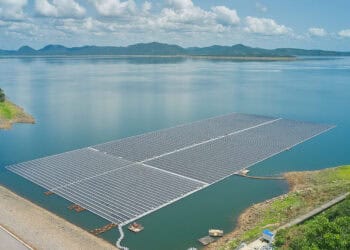
There have thus far been significant steps made to see what a renewable-based energy matrix may look like in Southern Thailand. A report on the potential of clean energy to provide the province of Krabi with 100% renewable energy offers several insights into how the country can adopt a green energy matrix. The first is prioritizing renewable energy entering the grid over fossil fuels. Additionally, proper economic incentives and grid improvements will prove crucial. This report presents case studies of several situations in which solar energy can provide a strong, reliable, and economically viable alternative to traditional energy sources. These include projects such as the Ruenmai Restaurant, which incorporated a combined floating and rooftop solar project with a payback period of 6 years. Other solar installations in both Krabi and neighboring provinces show the range of potential for solar. These include a market in Krabi, a school in Surat Thani, a hospital in Songkhla, and a hostel in Surat Thani. 

These case studies seem to offer a physical demonstration of a report published by the International Energy Agency (IEA) on the potential of rooftop solar in the country. This report outlines how, if distributed PV generation were used on 10% of the estimated available rooftop space, the capacity would exceed the system’s peak demand. It is now up to the Thai government to adopt policies and incentives that encourage all forms of solar energy. By taking lessons from neighboring countries and encouraging solar development, Thailand can take advantage of its least expensive form of electricity generation and reduce its reliance on fossil fuels.

Finished the story? Meet the people behind it.

EP Network is where energy journalists, investors, companies, and clean energy leaders connect.

Join EP Network →
ShareTweetShare
Otto Gunderson

Otto Gunderson

Otto Gunderson has been working in clean energy for the last 7 years, with the last two being spent split between South America, Africa, and Southeast Asia, reporting on the transition to clean energy. After traveling and writing for two years, he founded The Energy Pioneer to create a news outlet with a global approach to clean energy journalism. He particularly enjoys writing about entrepreneurship, investment, and innovations that are contributing to greenhouse gas reduction and clean energy development.

Related Posts

Fighting Saltwater with Sunlight: How Solar Technology Is Tackling the Drinking Water Crisis in Southwest Bangladesh
Solar

Fighting Saltwater with Sunlight: How Solar Technology Is Tackling the Drinking Water Crisis in Southwest Bangladesh

July 14, 2026
88% Renewable, 100% Confused: Brazil’s Coal Problem
Fossil Fuels

88% Renewable, 100% Confused: Brazil’s Coal Problem

July 13, 2026
The Rockefeller Foundation’s Catalytic Capital: Turning Early Investments into Lasting Energy Impact
Private Financing

The Rockefeller Foundation’s Catalytic Capital: Turning Early Investments into Lasting Energy Impact

July 10, 2026
The Power of Commitment: How Government Investment Accelerated Electrification in Tanzania
Public Financing

The Power of Commitment: How Government Investment Accelerated Electrification in Tanzania

July 8, 2026
Reforming Government Fossil Fuel Subsidies
Public Financing

Reforming Government Fossil Fuel Subsidies

July 6, 2026
Iran Exposes the US’s Achilles’ Heel: Oil
Features

Iran Exposes the US’s Achilles’ Heel: Oil

July 1, 2026
Next Post
AI Needs Energy- But it Doesn’t Have to Cost the Planet

AI Needs Energy- But it Doesn't Have to Cost the Planet

Beyond Megawatts: ASEAN’s Power Grid Should Not Leave Anyone Behind

Beyond Megawatts: ASEAN's Power Grid Should Not Leave Anyone Behind

Popular Stories

  • The Race to Host AI: Data Centres in Water-Scarce India

    The Race to Host AI: Data Centres in Water-Scarce India

    0 shares
    Share 0 Tweet 0
  • Vietnam’s Oil Buffer Faces Pressure as the Iran War Disrupts Global Oil Flows

    0 shares
    Share 0 Tweet 0
  • Caught Between India’s Military Ambitions and Green Promises: The Future of the Andaman and Nicobar Islands

    0 shares
    Share 0 Tweet 0
  • The Philippines’ Nuclear Gamble

    0 shares
    Share 0 Tweet 0
  • South Sudan’s Missed Opportunity: Untapped Renewables Leave Millions in the Dark

    0 shares
    Share 0 Tweet 0

Actionable Info

From The Energy Pioneer

Where the energy transition connects.

Journalists, investors, companies, and clean energy leaders — all in one network.

Explore EP Network →

The Energy Pioneer

The Energy Pioneer covers the global energy transition — from clean tech and green finance to policy and renewable energy.

Recent Posts

  • Fighting Saltwater with Sunlight: How Solar Technology Is Tackling the Drinking Water Crisis in Southwest Bangladesh
  • 88% Renewable, 100% Confused: Brazil’s Coal Problem
  • The Rockefeller Foundation’s Catalytic Capital: Turning Early Investments into Lasting Energy Impact

Quick Links

  • Home
  • Clean Tech
  • Renewable Energy
  • Green Finance
  • Policy
  • Regions
  • Features
  • Who We Are

© 2026 The Energy Pioneer | All Rights Reserved. |

From The Energy Pioneer

You read about the energy transition. EP Network connects you to it.

Join the network of journalists, investors, companies, and professionals building the clean energy future.

No thanks
Please enter a valid email.
You're in. We'll be in touch soon.
No Result
View All Result
  • Home
  • Clean Tech
    • Electric Vehicles
    • Energy Efficiency
    • Green Hydrogen
    • Smart Grid
    • Battery Storage
  • Green Finance
    • Public Financing
    • Private Financing
    • Carbon Markets
  • Policy
  • Renewable Energy
    • Wind
    • Solar
    • Hydropower
    • Nuclear
    • Hydrogen
    • Fossil Fuels
    • Geothermal
  • Regions
    • Africa
    • Asia
    • Europe
    • North America
    • Latin America
    • West Asia
  • Features
  • Who We Are
    • About Us
    • EP Investing
    • Contact Us

© 2026 The Energy Pioneer | All Rights Reserved. |