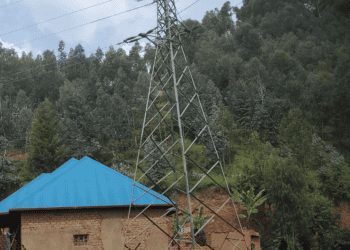

As the world shifts towards cleaner energy sources, Africa remains a continent with vast potential for biogas adoption. Experts agree that biogas is a versatile source of energy with various uses, including cooking, water heating, lighting, and heat generation for poultry farming. Yet, many countries in Africa still depend on wood for cooking and heating fuel.
In Africa, many households still rely on solid fuels, like wood, charcoal, or biomass, for cooking and heating. The use of solid fuels contributes to extensive indoor air pollution. This results in significant health issues in many African countries. Women in Africa are disproportionately affected by indoor pollution, as they are often responsible for household chores.
In Zimbabwe, for instance, the use of wood for cooking and heating fuel is one of the many drivers of deforestation in the country. Currently, firewood accounts for more than 60 percent of Zimbabwe’s total energy supply, with up to 98 percent of the rural population relying on firewood for cooking and heating. According to the Zimbabwe Forestry Commission, the country requires up to 11 million tons of firewood annually for domestic cooking, heating, and tobacco curing.
However, biogas can also be used to generate electrical power. In a recent study, Coddell Tanaka Mutate and his team from the Department of Electrical and Electronics Engineering at Galgotias University in India reveal that there are a decent number of biogas digesters in the country. Still, proper education should be provided to owners and operators so that they can fully benefit from this alternative energy source.
“If proper education is provided and awareness is raised, the owners can be able to generate electrical power for homes and communities at large. The number of biogas digesters should increase in the country, especially in the rural areas, since the biogas can also be used for lighting and cooking,” the research finds. “If this technology is fully adopted in Zimbabwe, the Rural Electrification Scheme can be realized, and less stress is imposed on the grid.”
At the same time, the Zimbabwe government should implement favorable policies and legislation to enhance the functionality of the process. Mohammad Taherzadeh, professor in Bioprocess Technology at the University of Borås in Sweden, says the reality is that biogas technology has yet to gain significant traction in many African countries.
Asked by The Energy Pioneer whether countries in Africa are embracing biogas as a clean source of energy, Professor Taherzadeh says the short answer is no.

For biogas to become a viable energy source in Africa, a focus on educating both the general public and local experts is necessary. Governments and organizations should invest in training programs that teach people how to produce and use biogas at the household and community levels. Additionally, biogas systems need to be adapted to fit the specific needs and resources of African communities, rather than relying on imported technologies that are often too complex and expensive.
“However, my experience for Africa and also some other regions lies in two major factors, among several others. One is the lack of education on how to produce and use it. And the elites—decision makers, companies, and universities—look at the solutions from industrial countries that give an expensive and sophisticated system,” Prof. Taherzadeh says.
Such expensive biogas systems and technologies, he says, cannot be adopted in developing countries and need domestication.
“In addition, there is a need for ordinary people to get a little education on the benefits of biogas, how to produce it, and how to use it in homes and villages. Then, the governments should educate some local experts to give help when people need it,” he adds.
Despite these challenges, biogas has the potential to make a significant impact in Africa. It can be produced on a small scale for household use or on a larger scale for industrial applications. Biogas can provide energy for cooking, lighting, heating, electricity generation, and fertilizer production for agricultural purposes. In fact, researchers are even exploring ways to use biogas systems to produce animal feed.
“Biogas can take care of the wastes and residuals and be produced on a very small scale for home, for example, from a 10-liter bottle, up to big industrials, for example, 10,000 m³ reactors,” Prof. Taherzadeh says.
He adds that biogas can produce gas for cooking, lighting, and heating, for electricity production by small engines, and also to produce fertilizers for agriculture.
“We are also developing the technology to use the same system, but a little more advanced, to produce animal feed for cows and sheep,” he says.
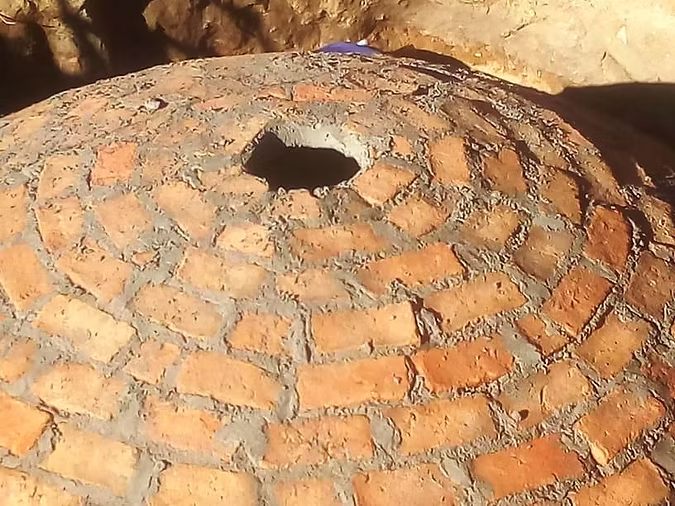
A further project in Malawi and South Africa gathered rich quantitative and qualitative data on biogas outcomes within African countries. In Malawi, the study reveals that the country “superficially possesses many of the aspects often cited as precursors to a biogas revolution.” However, the research indicates that countless abandoned digesters can be found scattered across the landscape, and any anticipated biogas revolution has yet to take hold.
“The initial mapping of projects and engagement with owners, funders, and providers have suggested that the interplay and relationship between these three stakeholders is a key determinant of a project’s success or failure, with the owner being the most important factor, as their willingness and ability to engage with the systems seems directly correlated to outcomes,” the study notes.
However, as countries in Africa unlock their biogas potentials, the continent can look forward to a brighter, more sustainable future, where energy access, economic growth, and environmental protection go hand-in-hand.