
Twenty-six million Ghanaians cook on wood and charcoal every day.
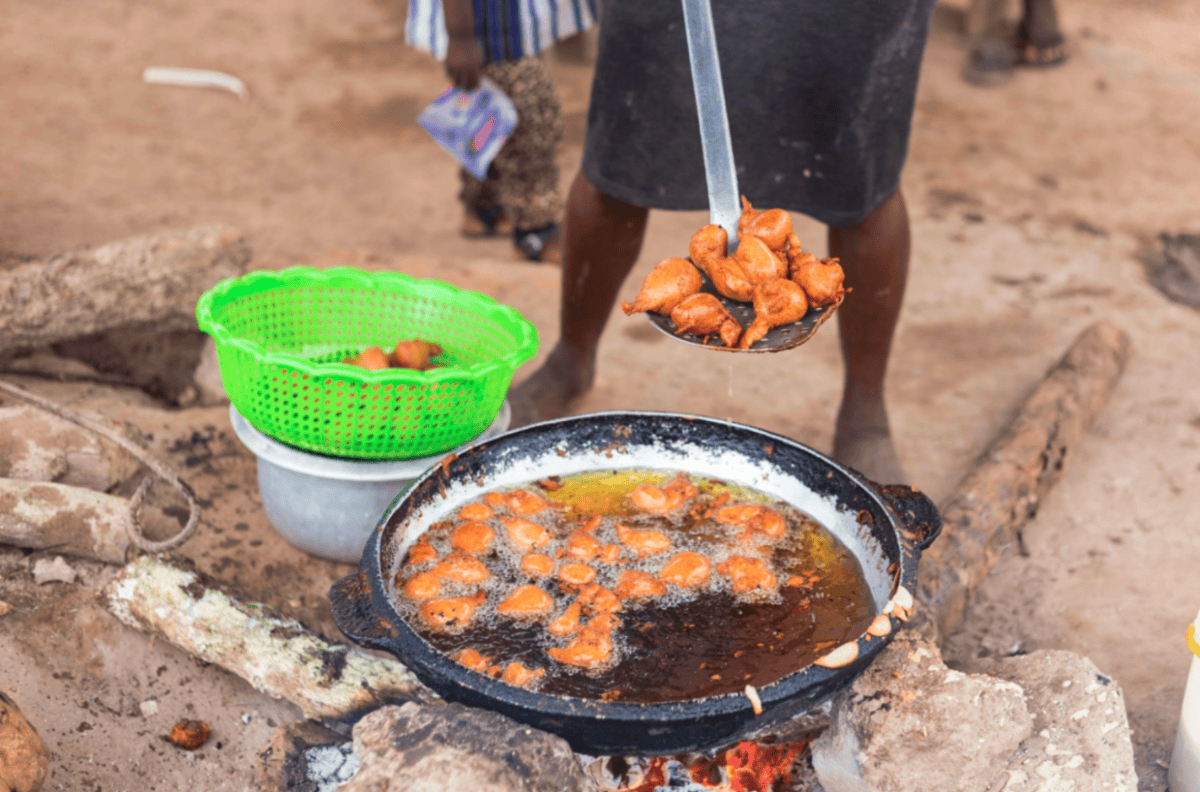
Lucy Anipa is a school cook in Ghana. Before 2018, her working day began crouching over a wood fire in a soot-darkened kitchen, smoke so thick her doctor warned her to stay away. She could not. It was her livelihood. “The children love my cooking,” she said.
When the Integrated School Kitchen Improvement Project (I-SKIP), supported by the Clean Cooking Alliance, brought an improved biomass stove to her school, the smoke in the kitchen cleared within weeks. Her wood use dropped by 70%.
The Gap Behind the Headline
Ghana has an 89% electricity access rate. Still, electricity access tells only part of the story; for many households, energy poverty is defined less by lighting than by reliance on traditional cooking fuels.
Approximately 75% of Ghanaians still rely on solid biomass fuels for cooking, principally wood and charcoal. Many households are connected to the national grid, but electricity is typically used for lighting and appliances rather than cooking, which is still largely done over wood fires.
Household air pollution from cooking is responsible for 815,000 premature deaths in Africa annually. In Ghana household air pollution has been directly linked to 28,000 premature annual death, primarily among women and children. Children from households using unclean cooking fuels face a 73% higher risk of death before the age of five.

A Decade of Missed Targets
Liquefied Petroleum Gas (LPG), is an alternative to these wood and charcoal fires and despite government promises, they have missed successive LPG penetration targets. A 50% adoption target set for 2015 reached only 22.3%. Current penetration sits at around 36.9%, still below the initial target.
While Accra, Ghana’s capital, records 68% LPG penetration, most northern regions sit at 11%.
The National Petroleum Authority launched the Cylinder Recirculation Model in September 2023, a system where households swap empty cylinders for pre-filled ones at exchange points, removing the barrier of upfront cylinder ownership. The concept is proven in Senegal, India, and Indonesia. In Ghana, exchange points as of mid-2024 were operating only in selected Accra locations.
Money and Manufacturing
Two developments in late 2025 signal that the clean cooking transition may finally be finding the investment it requires.
In September 2025, Envirofit opened a new manufacturing facility in Accra, producing advanced biomass stoves and its SmartGas pay-as-you-cook LPG technology, which allows households to top up cooking gas in small amounts through mobile money.
BURN Manufacturing, Africa’s largest cookstove producer, had already established Ghana as its first factory location outside Kenya in 2022.
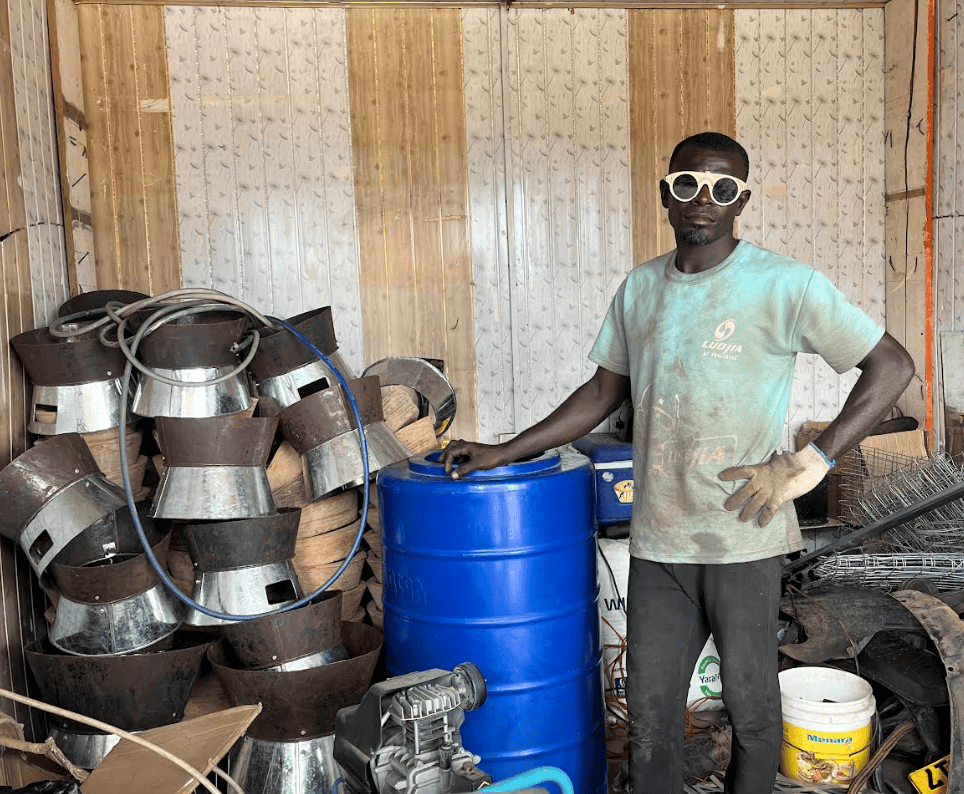
In December 2025, the World Bank issued a USD 200 million Clean Cooking Outcome Bond for Ghana, funding the distribution of over 415,000 clean cooking devices to 1.3 million people between 2025 and 2028. Electric cookstoves for homes with grid access. Improved biomass stoves for those without. The bond is tied to carbon credits under Article 6.2 of the Paris Agreement, making Ghana one of the first countries to link cookstove projects to Internationally Transferred Mitigation Outcomes.
Ghana currently has 15 registered cookstove carbon credit projects generating 8.4 million credits to date. Carbon credit revenue from cookstoves across Africa quadrupled to USD 107 million in 2024. Ghana’s early investment in its Carbon Market Office positions it to capture a growing share of this revenue and direct it back into the transition.
The Ladder, Not the Leap
The solution is not to demand that every Ghanaian household move immediately from firewood to LPG or induction cooking. It is to move everyone one step up the energy ladder, systematically.
In northern communities still cooking on three-stone fires, a well-designed improved biomass stove with a chimney is the realistic first step. In peri-urban areas where cylinders are nearby but refills are unaffordable, mobile money LPG financing is the bridge.
In grid-connected homes, electric cooking is the destination.
Ghana is the only country in the world to have hosted two global Clean Cooking Forums. It has manufacturers on its soil, a carbon market framework, and a USD 200 million bond in motion. What it needs now is the distribution infrastructure and the political will to reach the people still cooking in the smoke. Lucy Anipa’s kitchen is cleaner today. The question is how quickly that becomes true for the other Twenty-six million.