
The overreliance on hydropower has come at a heavy cost for Zambia, as a severe drought in 2024 has plunged the country into an unending electricity crisis.
The recent El Niño drought, the worst in over four decades, has resulted in a massive drop in water levels at Kariba Dam, Itezhi-Tezhi, and Kafue Gorge, the country’s significant hydropower sources. Currently, more than 80 percent of Zambia’s electricity comes from hydropower, and droughts have far-reaching consequences for the population, including daily electricity cuts of up to 21 hours. Zambia’s neighbor, Zimbabwe, which also depends on the Kariba Dam for its hydropower, has also been hit by long power outages.
“Millions of people faced daily power cuts, sometimes lasting up to 21 hours or more, that severely disrupted essential services like healthcare and education. Patients in hospitals were at risk, as life-saving medical equipment was made unreliable by the unstable power supply. Farmers struggled to irrigate their crops, worsening food insecurity. Small businesses—the backbone of the economy—were also severely impacted and forced to close early or operate at a loss, making recovery even more difficult,” according to a recent analysis from the United Nations Development Programme (UNDP).
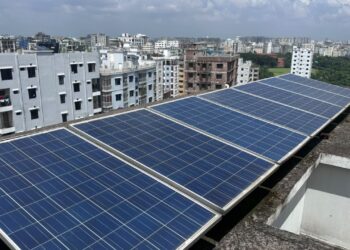
However, Zambia is part of the Africa Minigrids Program (AMP), a UNDP initiative focused on driving private-sector assessment of solar minigrids. They are doing this by implementing cost-reduction strategies and promoting innovative business models. The AMP is funded by the Global Environment Facility (GEF) and implemented in partnership with RMI and the African Development Bank. This program is making waves, and Zambia is reaping the benefits through projects like Solar for Health, a collaboration between UNDP, the Global Fund, and the Ministry of Health to ensure quality healthcare delivery.
At the same time, the UNDP notes that Kenya provides a compelling case study of how strategic energy-sector reforms can enhance resilience.
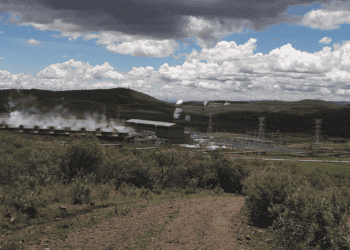
“In the 1990s, the nation faced a crippling drought that severely impacted its hydropower generation capacity, prompting a deliberate shift toward a diversified energy mix. The transition to geothermal, wind, and solar power has strengthened Kenya’s energy security and reduced its exposure to climate-induced disruptions, offering a valuable model for other African nations to follow,” the UNDP notes.
There is a glimmer of hope for Zambia as the country is now diversifying its energy sources. Zambia President Hakainde Hichilema recently told an Energy Forum for Africa (EFFA) conference that “as a country, we have continued with the reforms in the electricity sub-sector. These reforms are fundamental to the agenda that we are for—universal access to electricity.”

President Hichilema adds that his government will continue working on reforms, including open access, net metering, and independent power producers. “These reforms are necessary to support the government’s agenda for universal access to electricity,” he says.
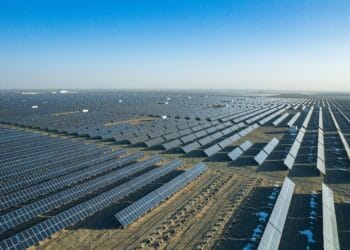
The country’s renewable energy drive has received a significant boost after securing funding for a new solar project. At the end of October this year, the African Development Bank approved a $14.54 million financing package to support Zambia’s Garneton North 20-megawatt solar project in the country’s Copperbelt Province. This new development will catalyze Zambia’s renewable energy expansion and address the current energy deficit.
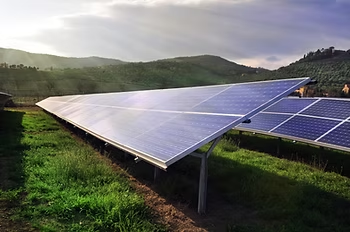
When operational, the project will provide 82,000 people with clean, reliable electricity and eliminate 58,740 tons of CO₂ emissions per annum, according to a recent statement from the African Development Bank.
This financial package will include $7.27 million from the African Development Bank’s own resources, along with matching concessional financing from a Development Finance Institution. The bank adds that the package demonstrates a bold commitment to closing Zambia’s energy gap while advancing the Mission 300 goal of providing 300 million Africans with access to electricity by 2030. Zambia was among the first countries to launch national energy compacts under Mission 300 in January 2025.
The $24.5 million project will design, construct, operate, and maintain the 20-megawatt solar plant, to be connected to the national grid via a 10 km, 33 kV power line. Under a 25-year take-or-pay Power Purchase Agreement, the Zambia Electricity Supply Corporation Limited will off-take all electricity generated from the plant.
“The project marks a key milestone in Zambia’s efforts to restore confidence in its power sector, attract private sector investment, and drive progress toward closing the energy gap and achieving Mission 300 goals,” says Wale Shonibare, director of Energy Financial Solutions, Policy, and Regulation at the African Development Bank.
The Garneton North 20 MW Solar Project is one of six projects selected by the Zambian government under the country’s Global Energy Transfer Feed-in Tariffs (GETFiT) program, which is designed to unlock private-sector investment in small- and medium-scale renewable energy independent power projects.
It will hire 90 people during construction, as well as 10 people during operations. The project will add critical capacity to Zambia’s strained power grid, reducing blackouts and improving energy security.
The GETFiT program approach will facilitate the timely procurement of a total of 120 MW of renewable energy capacity; diversify Zambia’s power mix, and demonstrate that Zambia’s power sector is once again bankable for private investment.
“Through the successful implementation of this project and the broader program, Zambia will demonstrate its strong commitment to diversifying its energy mix away from hydropower and enhancing energy security,” said Jing Li, division manager, Energy Financial Solutions at the African Development Bank.
“By expanding renewable generation capacity, the project will help reduce the frequency and severity of power outages; ensure a more reliable electricity supply, and contribute to maintaining cost-reflective tariffs for consumers,” she added.
The Garneton North 20 MW Solar Project aligns with the African Development Bank’s Ten-Year Strategy (2024–2033) and the New Deal on Energy for Africa, advancing a low-carbon development path and facilitating universal electricity access through clean energy. It further supports the Bank’s climate change, gender, youth employment, and resilience strategies, as well as private-sector-led renewable energy development under Mission 300.
The Garneton North 20 MW Solar Project comes on the heels of yet another project signed between the African Development Bank’s Sustainable Energy Fund for Africa (SEFA) and partners for a US$26.5M deal for Zambia’s Ilute solar project, which will supply the regional power market through an innovative trading structure.
According to the African Development Bank, the project, an Independent Power Producer (IPP) located in Western Zambia, will supply electricity via the Southern African Power Pool (SAPP) under a market-based Power Purchase Agreement (PPA) with regional power trader GreenCo Power Services Ltd.
Zambia’s push into solar energy is shedding new light on the country’s energy landscape, offering hope for a future beyond the current crippling power outages that have plagued the country. With projects like the 100 MW Chisamba and Mailo solar power plants already feeding energy into the grid, Zambia is making strides in reducing its overreliance on hydroelectric power.