
As Zimbabwe searches for solutions to its chronic electricity shortages, nuclear power is increasingly featuring in policy discussions as a potential long-term energy source.
Zimbabwe has struggled with recurring power deficits for years, with electricity demand often outstripping supply. Some areas only receive 4 hours of electricity a day. The country relies heavily on hydroelectric power from the Kariba Dam and coal-fired generation from Hwange Thermal Power Station. However, recurrent droughts linked to climate change have reduced water levels at Kariba Dam, limiting electricity generation, while aging infrastructure and frequent breakdowns have further constrained supply at Hwange Thermal Power Station.
With this in mind, policymakers are scrambling to diversify their energy sector with clean energy solutions like solar, wind, green hydrogen, and nuclear power, in an effort to strengthen energy security and support economic growth.
Last year, Zimbabwean Vice President Constantino Chiwenga revealed that the government was actively exploring nuclear energy.
“We are also investigating nuclear energy, particularly small modular reactors, as part of a balanced energy portfolio,” Vice President Chiwenga told the 6th International Renewable Energy Conference in Zimbabwe’s resort town of Victoria Falls.
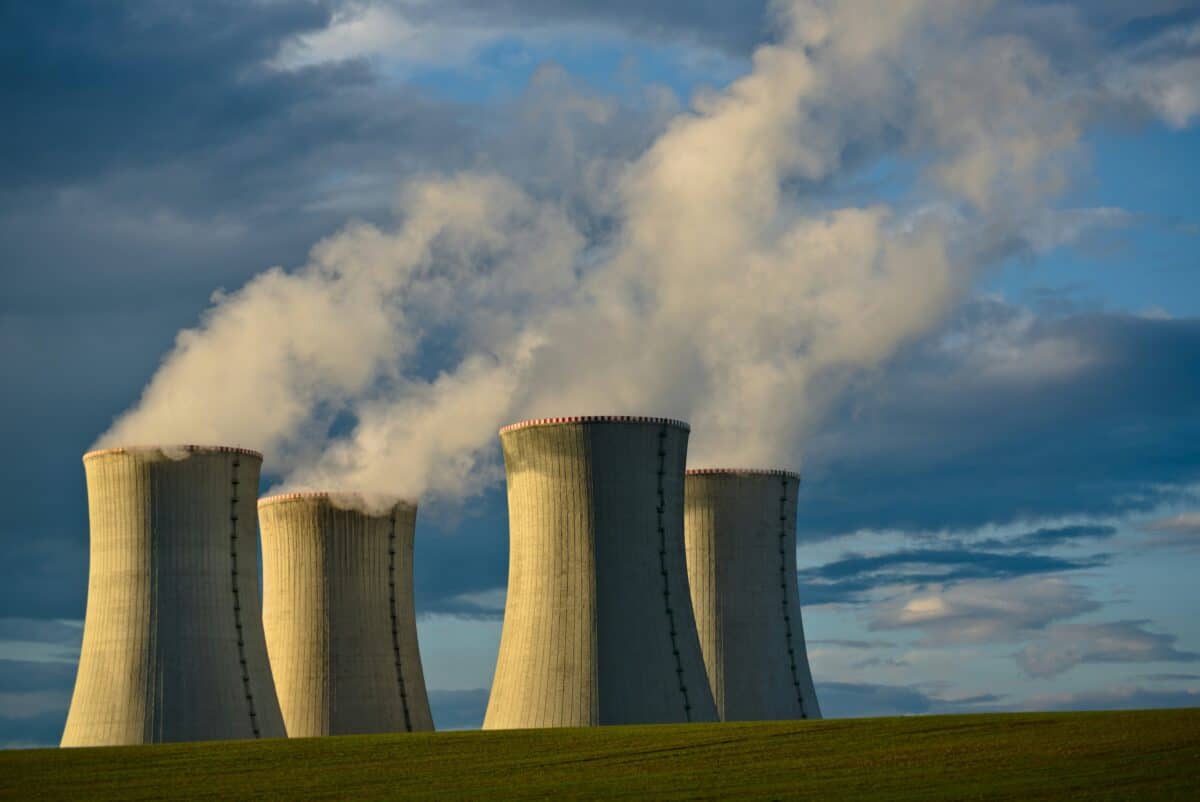
The government sees nuclear energy as a possible source of reliable baseload power that could complement renewable energy sources such as solar and hydropower, whose output can fluctuate depending on weather conditions.
South Korean company Korea Hydro & Nuclear Power (KHNP) signed an agreement with Zimbabwe’s Centre for Education, Innovation Research and Development to cooperate on a preliminary feasibility study for deploying a Small Modular Reactor (SMR) in Zimbabwe.

SMRs are a newer generation of nuclear reactors designed to be smaller, more flexible and potentially less expensive than conventional nuclear power plants. Supporters argue that they can be deployed more quickly, require less land and offer enhanced safety features.
“Through this business agreement, we hope Zimbabwe will accelerate its energy diversification and find sustainable energy solutions through SMRs,” KHNP President Hwang Joo-ho was quoted in the media as saying. “Building on our collaboration with Zimbabwe, KHNP will strengthen its position in the African market, where energy demand is rapidly growing.”
Yet, experts caution that Zimbabwe remains far from ready to embrace nuclear technology, particularly given the lack of technical expertise, regulatory capacity, emergency response systems, and financial resources needed to safely manage such a complex and potentially hazardous technology.
The debate over nuclear energy is also shaped by the legacy of some of the world’s worst nuclear accidents. While proponents argue that modern reactor designs are significantly safer than those involved in past disasters, memories of Chernobyl in Ukraine, Fukushima in Japan and Three Mile Island in the United States continue to influence public perceptions of nuclear energy.
Supporters of nuclear power argue that lessons learned from these disasters have resulted in major improvements in reactor design, safety systems, regulation and emergency preparedness. Critics, however, maintain that the potentially devastating consequences of a major accident cannot be ignored, particularly in countries with limited institutional capacity.
Anesu Nicholas Charamba, a lecturer in the Department of Mechatronics Engineering at Chinhoyi University of Technology, believes nuclear energy remains a distant prospect for Zimbabwe.
Last year, Charamba published a paper assessing Zimbabwe’s readiness to adopt nuclear and green hydrogen energy technologies.
“I think Zimbabwe is still far from adopting nuclear power. Nuclear power plants have high development costs and lengthy construction timelines. Of course, Small Modular Reactors can be considered but, in our context, we first have to address safety and waste management issues, largely because we do not have experience with nuclear technology,” Charamba tells The Energy Pioneer.
He said another critical challenge is human capital development.
“Do we have skilled personnel to deal with this specific technology? The teams that will focus on monitoring, management, maintenance, repair and the advancement of infrastructure and related technologies?” he asked.
According to Charamba, establishing a nuclear energy programme would require extensive investment in education, training and institutional development. Nuclear facilities require highly specialised engineers, technicians, safety inspectors, emergency response teams and regulators, many of whom would need years of training.
Charamba also raised concerns about how Zimbabwe would handle radioactive waste, maintain safety for plant operators and surrounding communities, and respond to emergencies or disasters. Integrating renewables into the energy system can be done at a fraction of the cost of nuclear power.
“If we consider both SMRs and renewable energy sources, we need to study how we are going to integrate the two. For nuclear power to become a realistic option, Zimbabwe must address challenges related to nuclear waste management and disposal, technological requirements, technical expertise, economic stability and, most importantly, geopolitical considerations and social acceptance,” he added.
Zimbabwe has abundant solar energy resources and has in recent years attracted growing investment in solar projects. Several Independent Power Producers have also entered the market, helping to diversify the country’s energy mix.
Charamba argues that nuclear energy may therefore not be the most practical solution.
“Nuclear power is highly capital-intensive, and I do not see it as necessary to address our current energy gaps as a developing nation. Much of our energy demand comes from the industrial sector. We can utilize renewable energy sources for residential and small-scale industrial operations while continuing to use coal for large-scale industrial activities,” he said.
If the goal is to reduce greenhouse gas emissions, Charamba argues that Zimbabwe could instead invest in cleaner coal technologies, including carbon capture and utilisation.
“Otherwise, let us expand existing thermal power stations or build new ones. At the same time, we should encourage renewable energy generation through Independent Power Producers for self-consumption or resale through net metering,” he added.
Despite these concerns, the Zimbabwean government remains bullish about nuclear energy and sees it as part of the country’s long-term development strategy.
“We are very hopeful that within the next 10 years, we will have nuclear reactors in Zimbabwe,” Zimbabwe’s Energy and Power Development Minister July Moyo told Sputnik Africa.
For now, nuclear power remains more of a long-term ambition than an imminent reality. But as electricity shortages persist and pressure mounts to secure reliable, low-carbon energy supplies, the debate over Zimbabwe’s nuclear future is likely to intensify.