
In Africa, Mozambique is quietly emerging as a leader in renewable energy development.
With a staggering 98 percent of its electricity already coming from clean sources, the country is on track to become one of the top ten nations globally for renewable energy. At the same time, the World Bank reports Mozambique has made remarkable progress in bringing electricity to its people, becoming one of the fastest-electrifying countries in Africa.
“As one of the Mission 300 countries with the highest access potential, it [Mozambique] nearly doubled the rate of electricity access from 31 percent in 2018 to 60 percent by the end of 2024. This represents about 9.5 million Mozambicans provided with electricity service,” the World Bank adds. Mission 300 is a collaborative initiative by the World Bank Group and the African Development Bank to bring electricity to 300 million people in Africa by 2030.
A significant part of this achievement, the World Bank finds, was the ProEnergia project it supported, which contributed to the implementation of Mozambique’s National Energy for All Program.
Mozambique’s current energy mix is dominated by hydropower, which accounts for 95 percent of its electricity requirements. Yet, the government has big plans to diversify. By 2030, the country aims to boost its renewable energy capacity to 23.4 gigawatts, with significant contributions from solar, wind, and biomass.
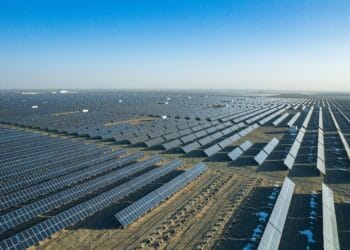
Mozambique is leveraging its abundant natural resources to drive this transition, and its potential is vast: an estimated 23 gigawatts of hydropower, 23 gigawatts of solar, 5.6 gigawatts of wind, and 2 gigawatts of biomass. The push for renewables is already underway with large-scale solar projects in the pipeline, and wind farms are starting to dot the landscape.
Some notable projects driving this transition include the Mocuba Solar Power Plant, a 40 MW facility operational since 2019, powering approximately 175,000 households; the Metoro solar project; and the Green Energy Mozambique Industrial Park, a $3 billion complex combining manufacturing and energy production capabilities.

Dr. Joshua Kirshner, a senior lecturer in human geography in the Department of Environment and Geography at the University of York in the U.K., has done extensive research on clean energy transitions in Southern and East Africa. Dr. Krishner explained to The Energy Pioneer that, although it remains a small share of Mozambique’s total installed power generation capacity, renewable energy has grown rapidly in the past five years.
Dr. Kirshner and his team recently published a study titled “Uneven Development and the Geographies of Energy Transition in Mozambique,” drawing on their field research conducted as part of a comparative three-year project examining the potential of community energy systems to foster inclusive and just clean energy transitions in Southern and East Africa. The study developed a critical, policy-relevant, and geographically grounded analysis of Mozambique’s energy transitions, which the researchers say are unfolding across multiple fronts.
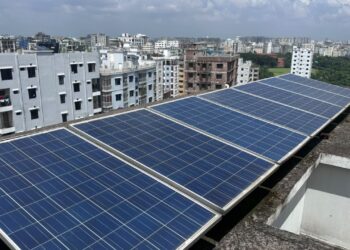
“Widespread energy poverty in the country and the physical structure of the country is quite large and dispersed, and it is challenging to extend the grid to all areas to reach all the population. It has been inadequate for more electricity through the central grid, so there is a move towards more decentralized systems of energy in different parts of the world: parts of Asia and parts of Africa,” Dr. Kirshner says.
He adds that this broader trend has caught on in Mozambique and has been influenced by other countries that pioneered this approach to decentralized renewable energy. Kenya, for example, has numerous small companies and substantial investments in solar power, equipment, and systems.
Ghana, Rwanda, and Tanzania, Dr. Kirshner says, are among the countries that stand out and have influenced Mozambique’s shift to decentralized renewable energy.
However, Dr. Kirshner was quick to add that although decentralized renewable energy has enhanced energy access in Mozambique, it remains too small to reach everyone, and pockets of the country are being bypassed.
“In terms of the current state [of renewable energy], it’s influenced a lot by the central government and energy companies. It’s also shaped by donor actors: European donors and some non-European donors from India, China, and the United Arab Emirates,” he says.
Dr. Kirshner added that other African countries can learn not only from Mozambique’s successes but also from what the country has not done well.
“It’s like a cautionary tale from Mozambique. One [lesson] would be that it is really important to work directly with communities that represent people who are going to be using the energy: the underserved communities, the civic society, energy providers, investors in small-scale energy provisions, and companies working in renewable energy provision. They can work directly with communities, and that’s not happening enough in Mozambique,” he says.
It is crucial that decentralized renewable energy is beyond the rural and urban divide.
“Decentralized energy is assumed to be a rural priority, and urban areas are assumed to be connected to the grid, but in reality, the urban areas are growing rapidly, and there are urban fringe areas. Those areas can benefit from decentralized-based energy approaches, but they are not looked at much; most of the donors are focusing on rural areas,” he says.
Dr. Kirshner adds that tax exemptions for equipment used to install these renewables can help boost investment in decentralized renewable energy.
“There are some movements on this in Mozambique to lower VAT, but it’s taking a long time, and it’s directed to certain kinds of equipment,” he says.
Despite challenges, Mozambique’s green energy revolution is transforming the country’s energy landscape, driven by abundant renewables and government initiatives. With more than 90 percent of electricity generated from clean sources and ambitious targets, Mozambique is poised to serve as a model for Africa’s sustainable growth.